 DistroyBoy
 SpringBoy
 BucketBoy
 DeltaBoyz
 Atomizer
 Rotator
 Ironwall
 OneKnob
 TalkBoy
 Dr. Mach
 Sawzall
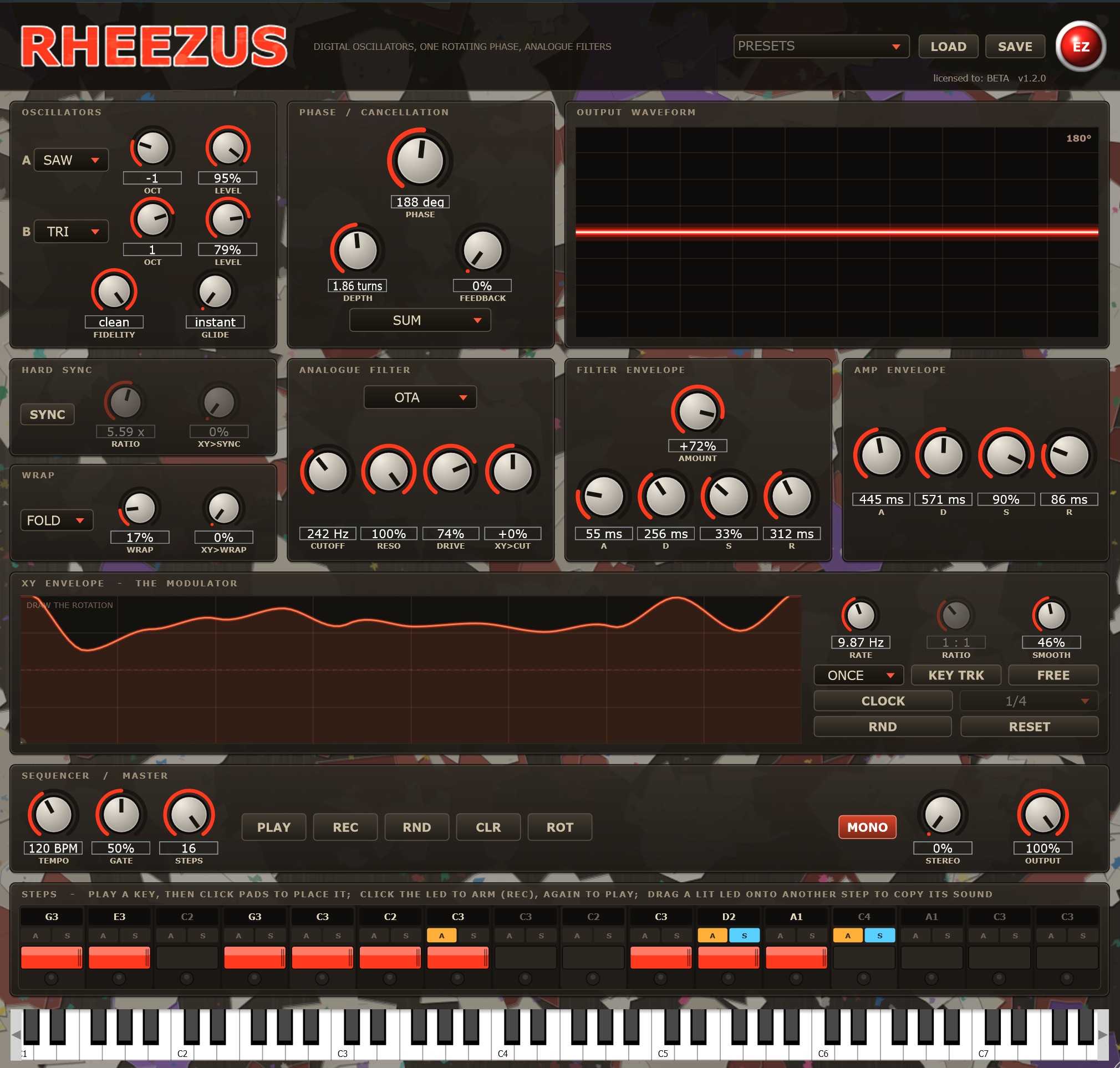 RHEEZUS
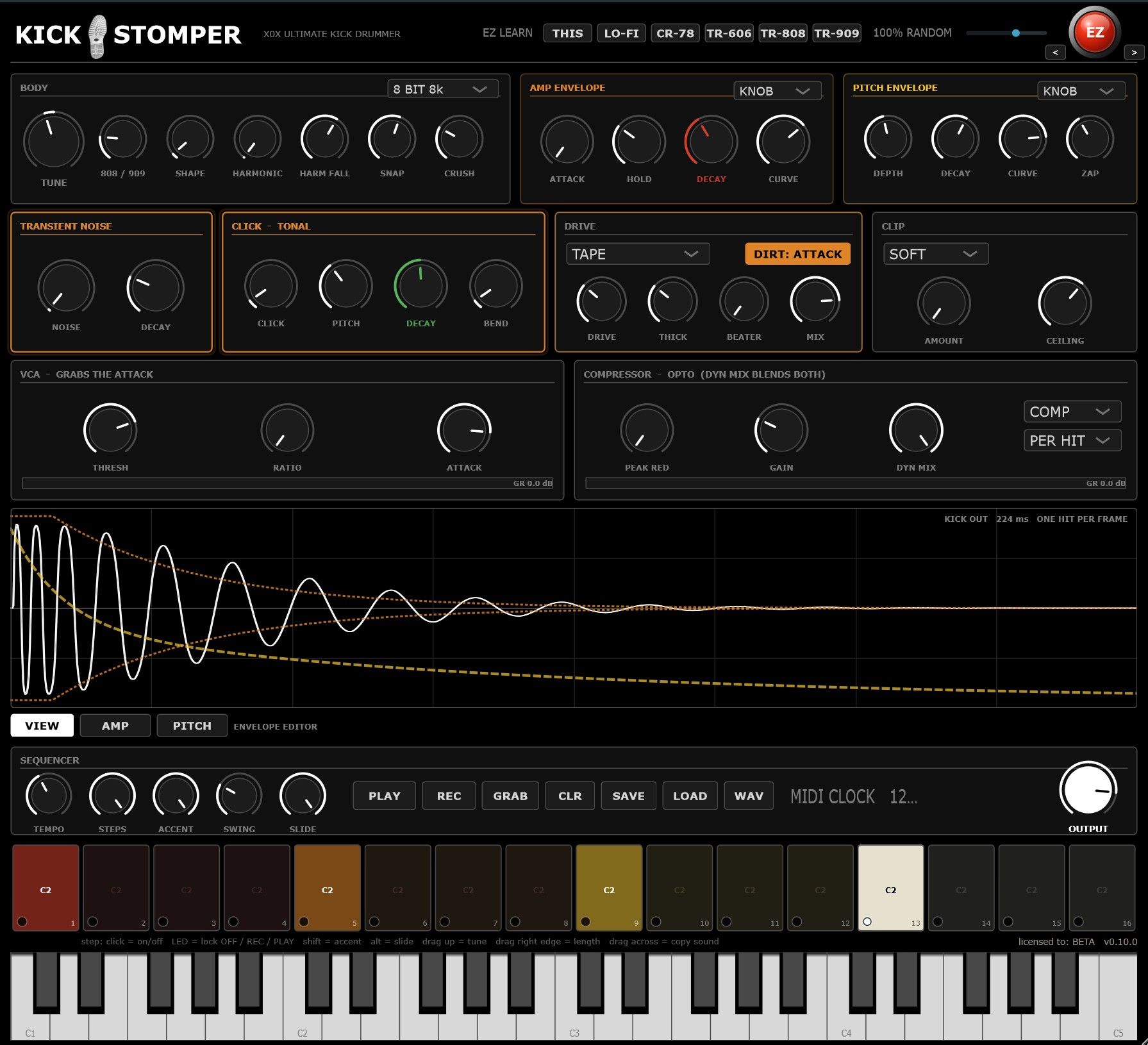 KickStomper
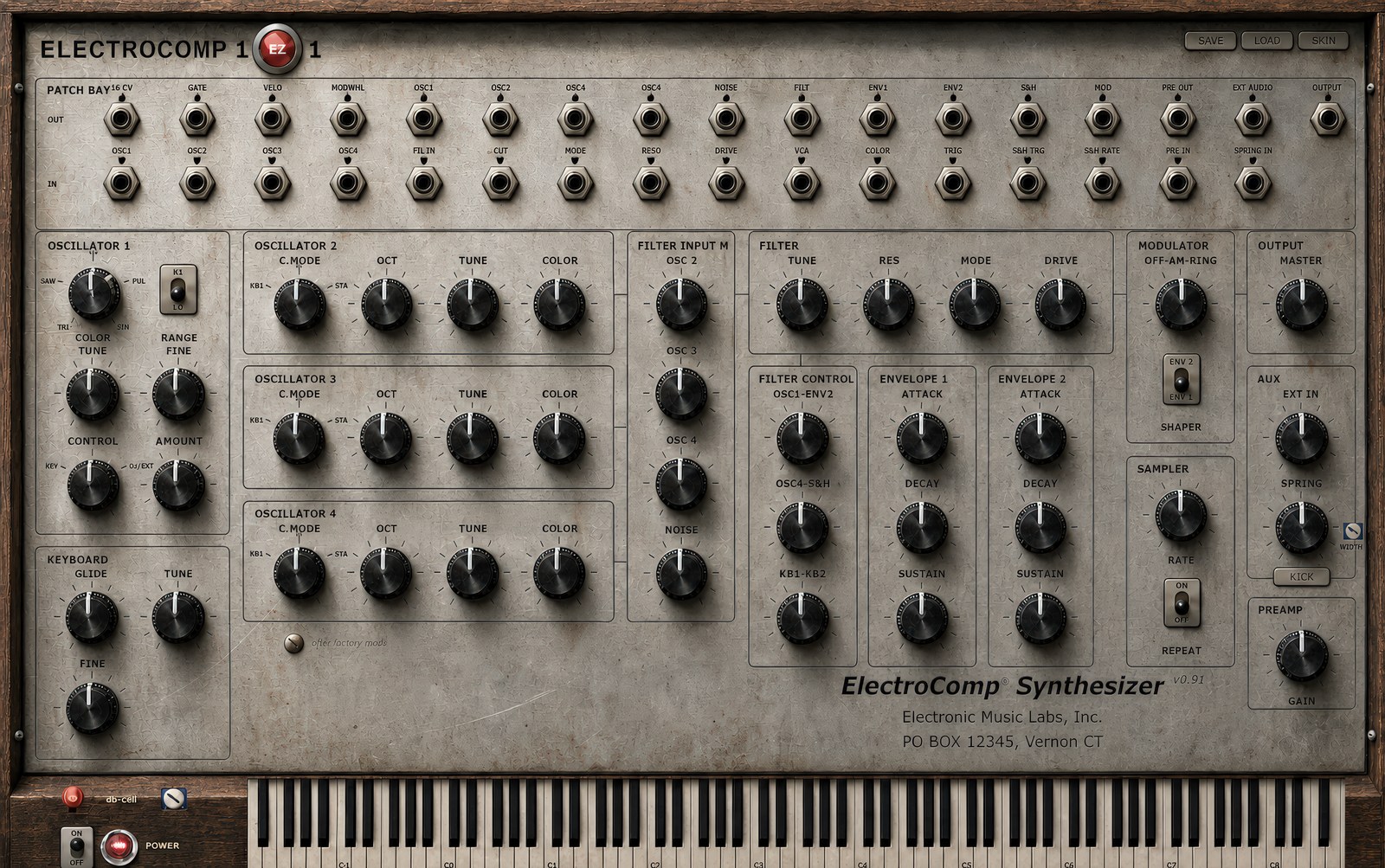 ElectroComp
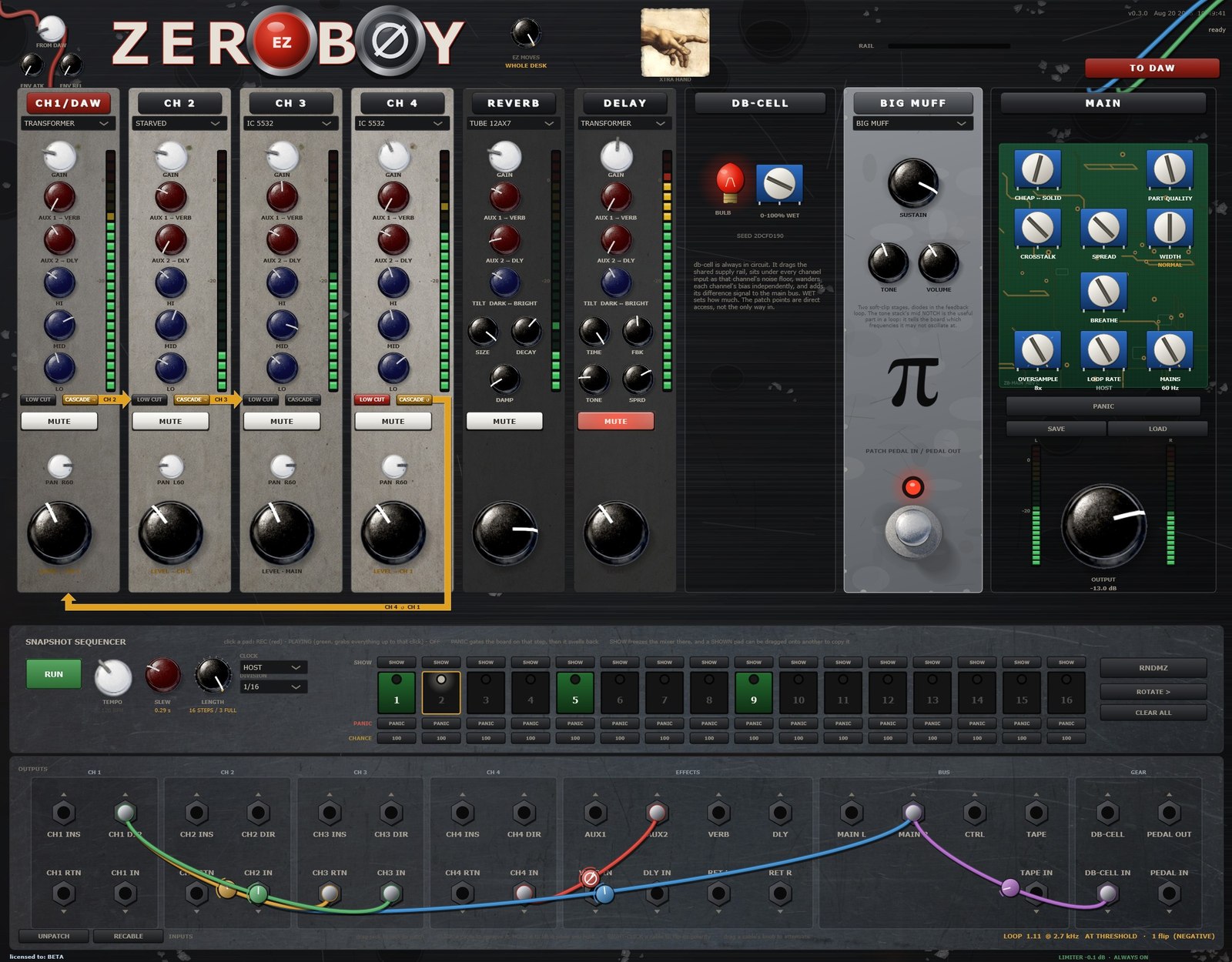 ZeroBoy
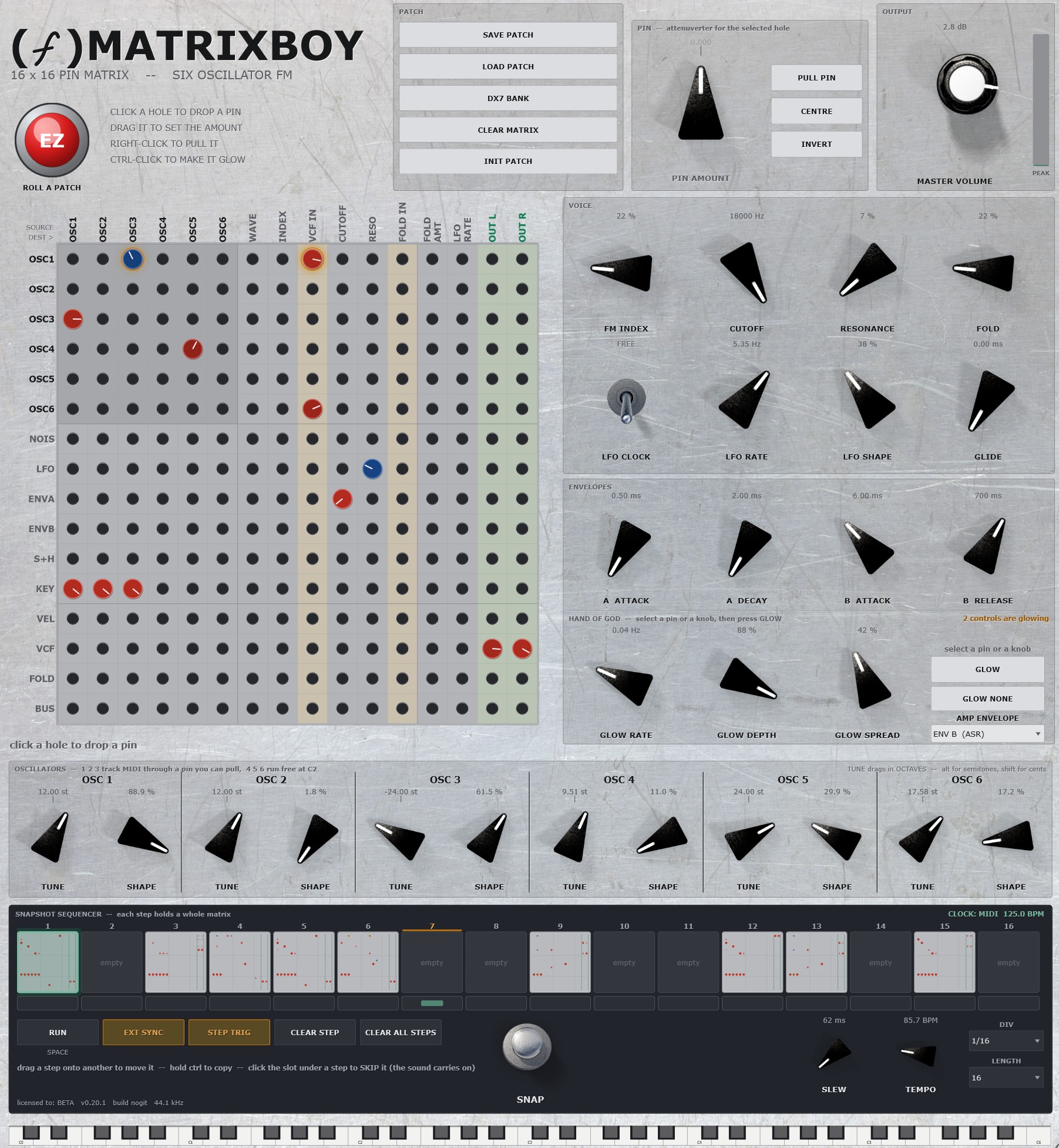 (F)MatrixBoy
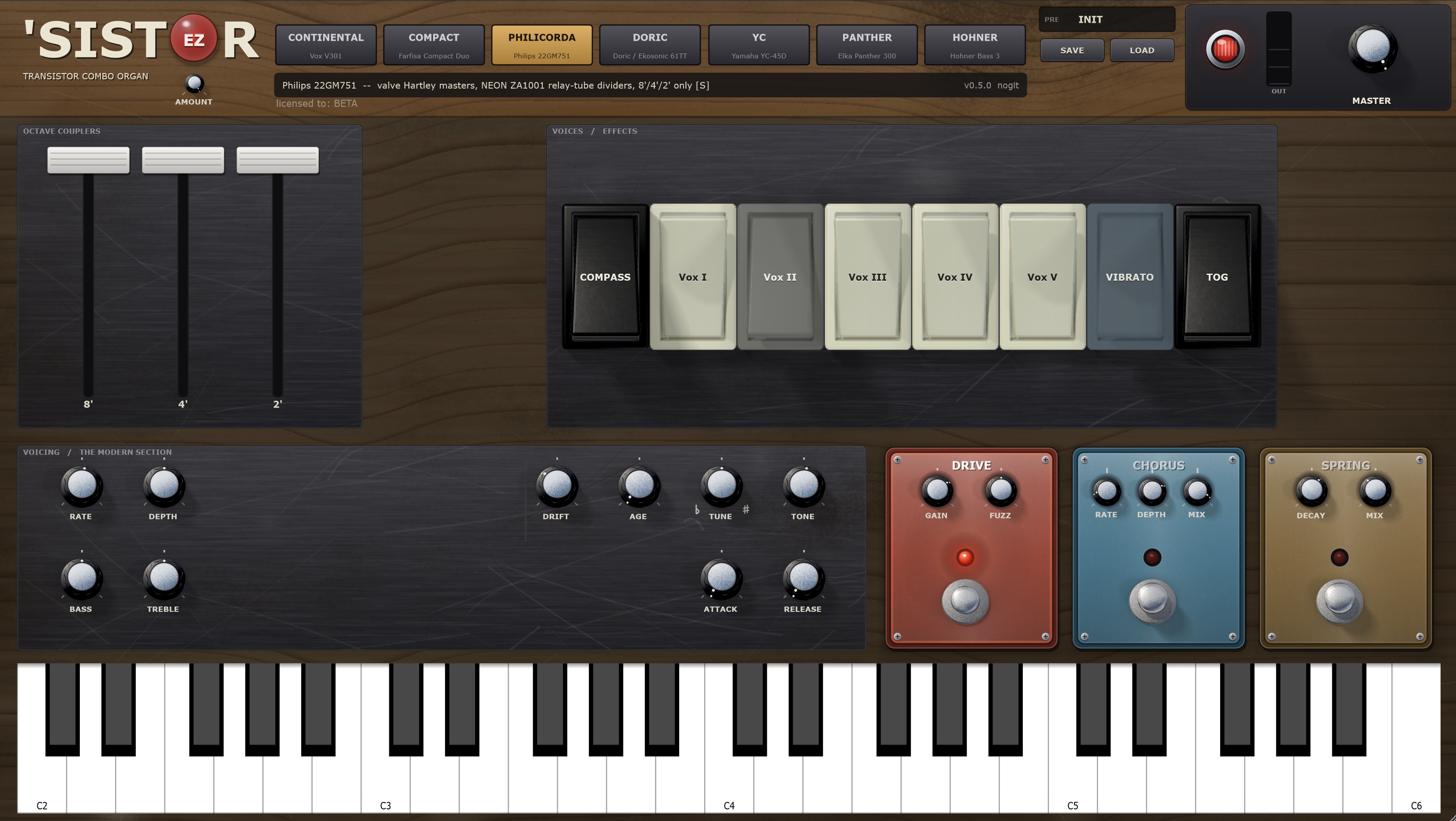 'Sistor
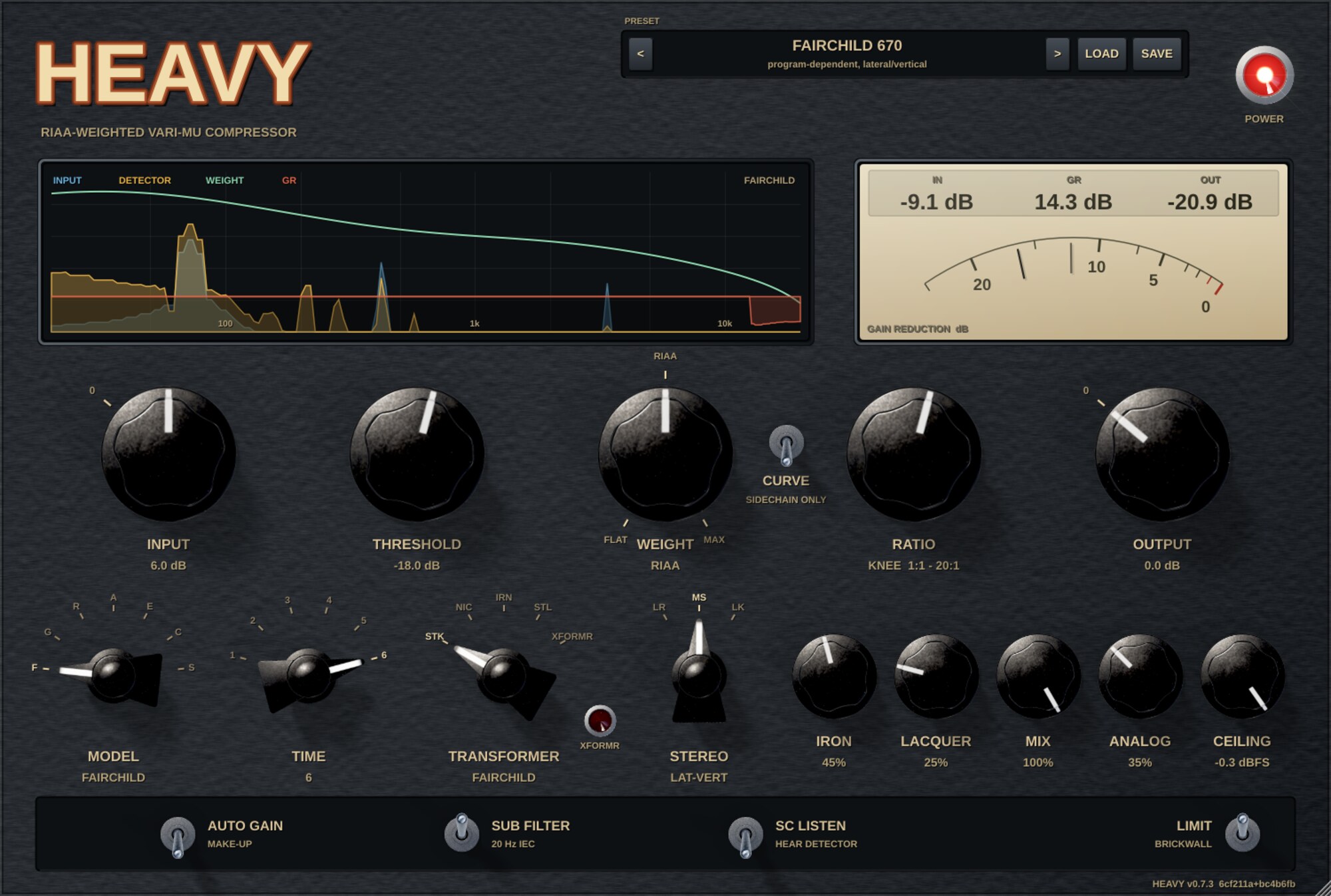 Heavy
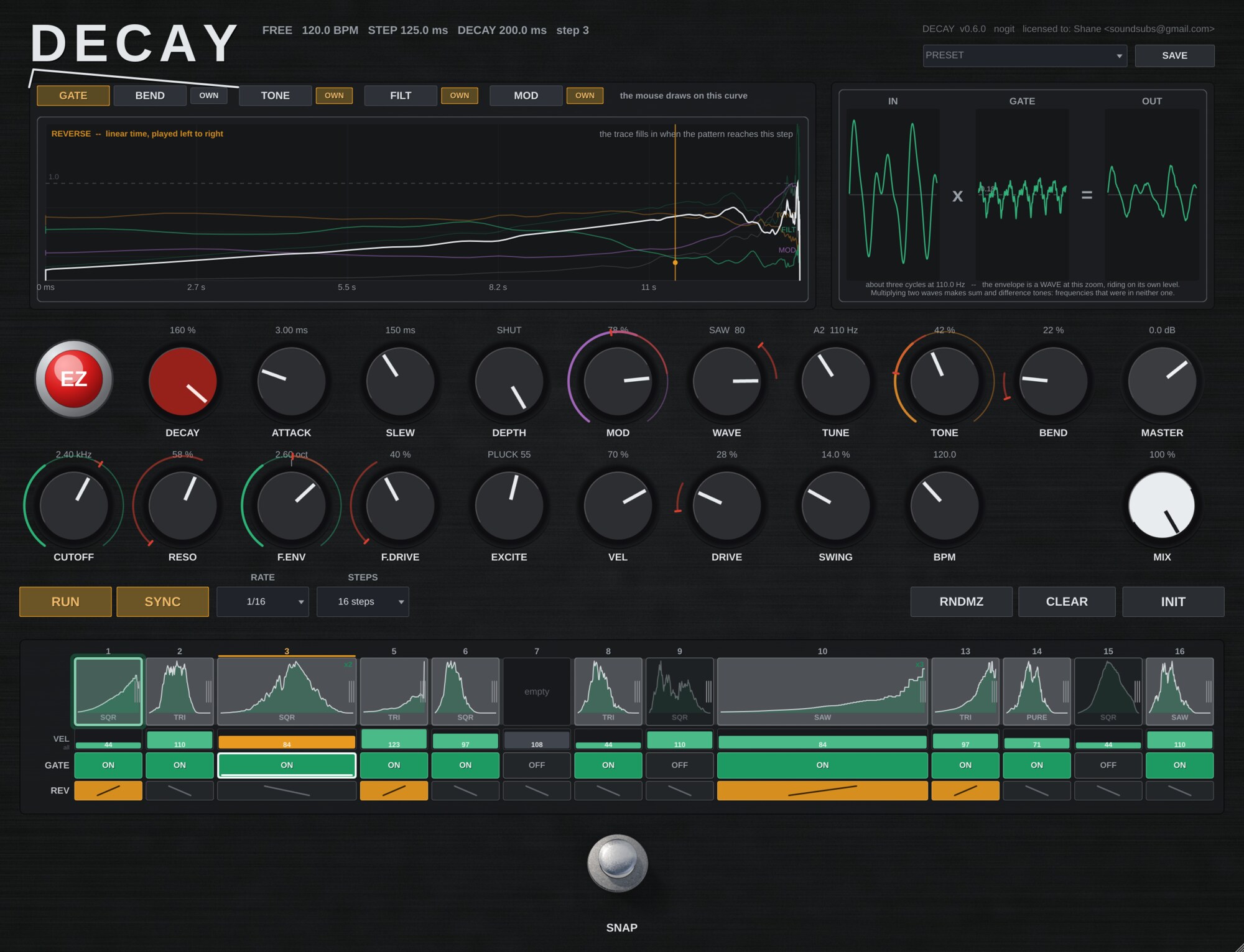 Decay
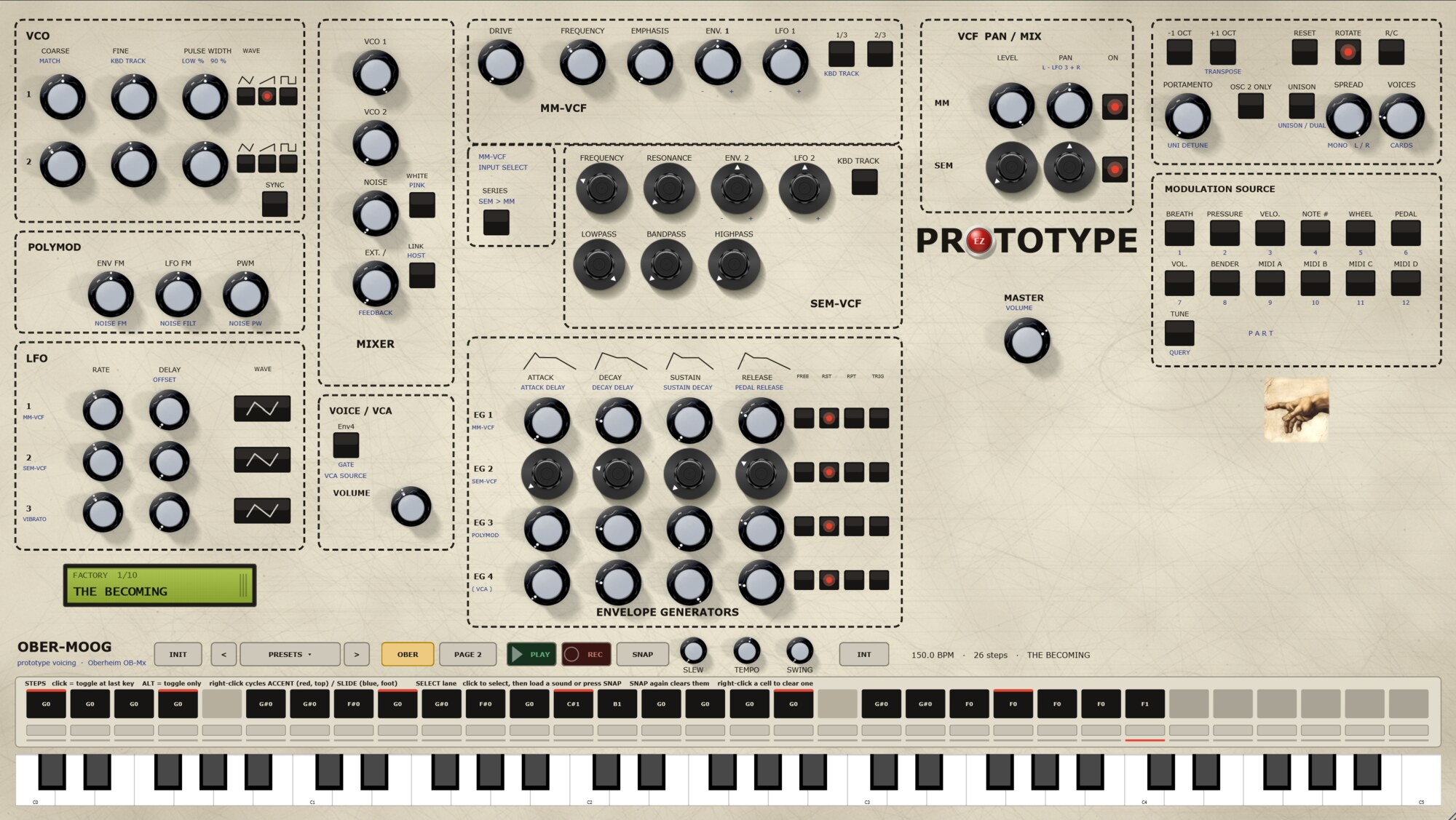 Obermoog
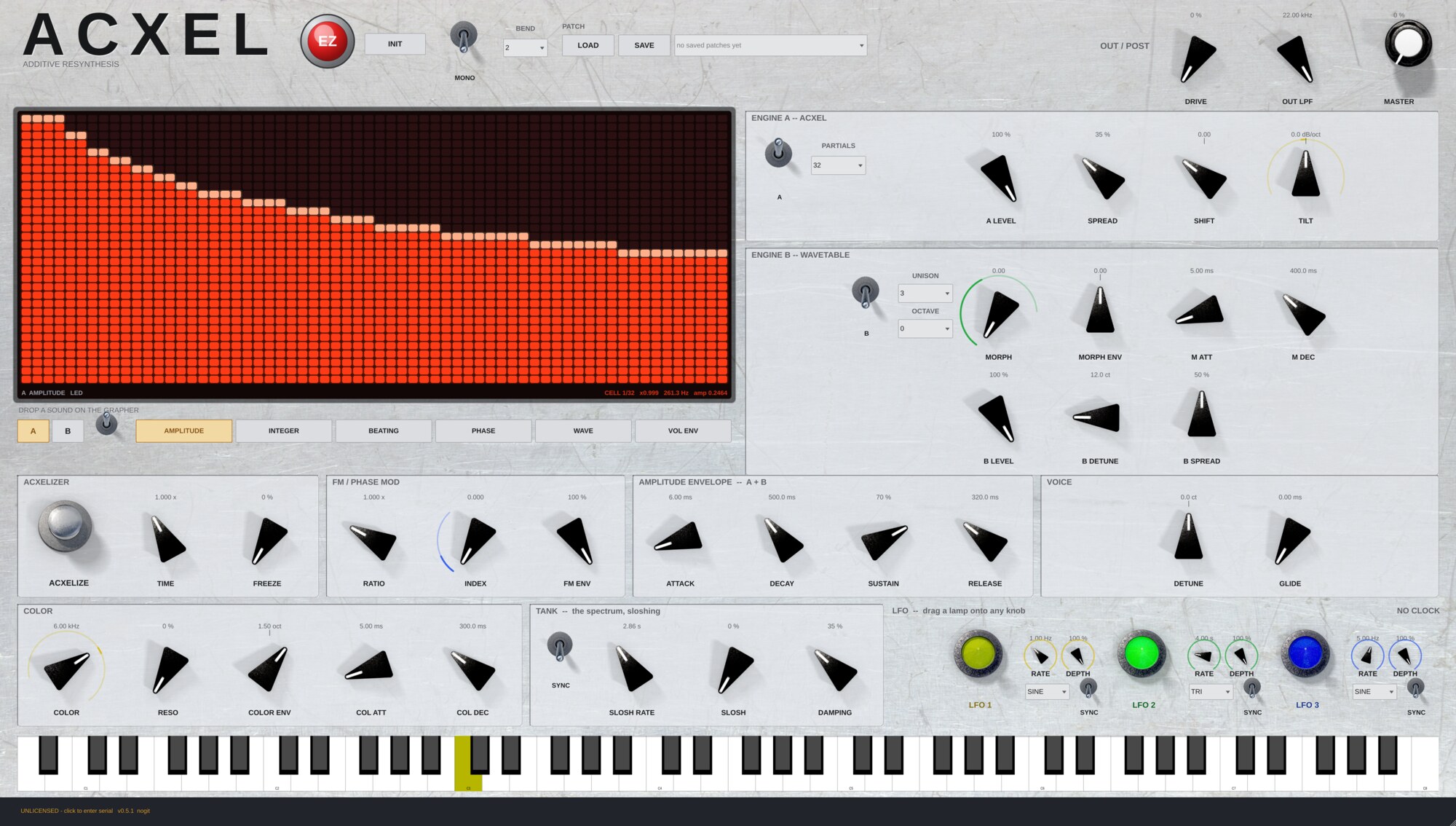 Axcel
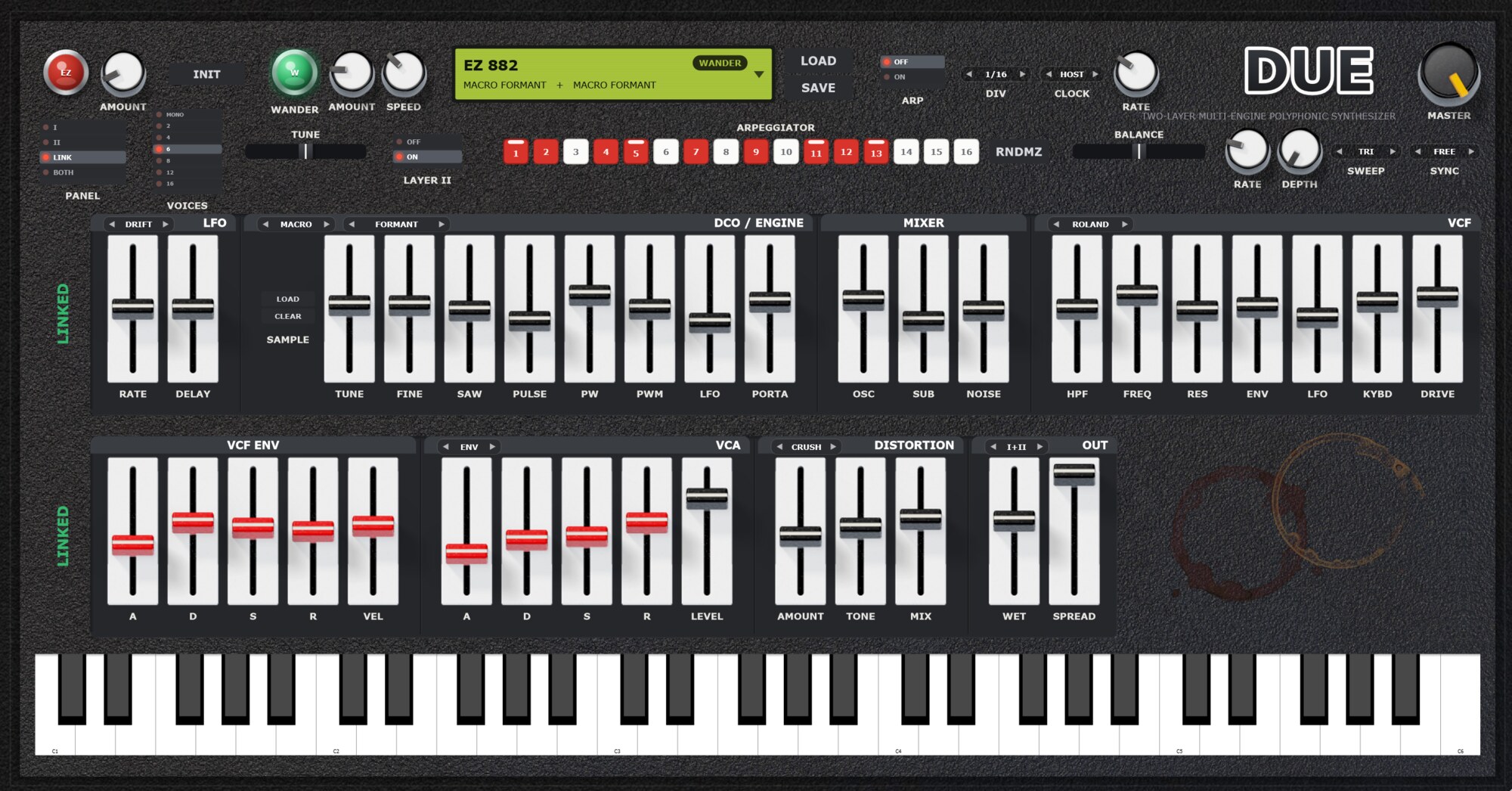 Due
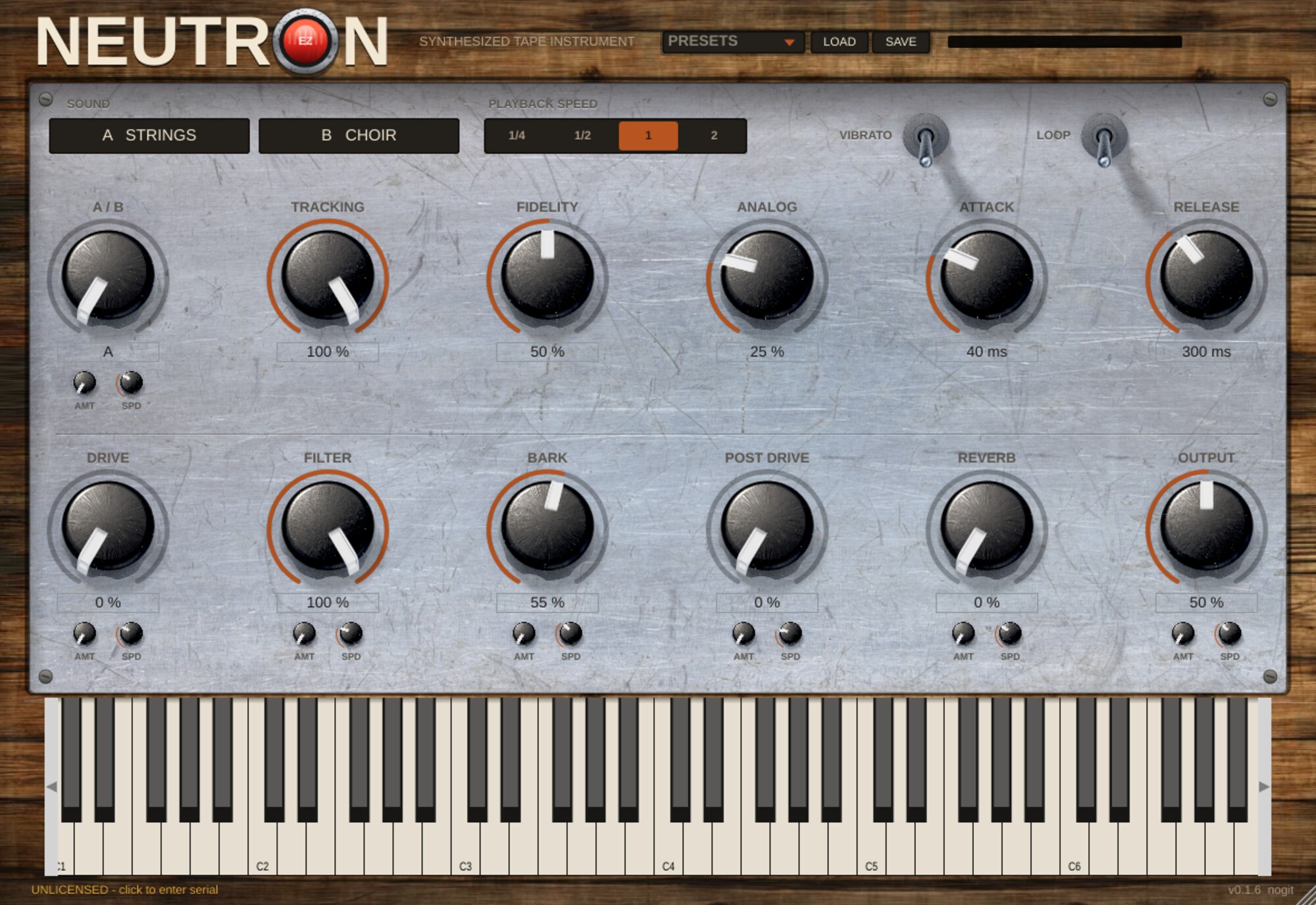 Neutron
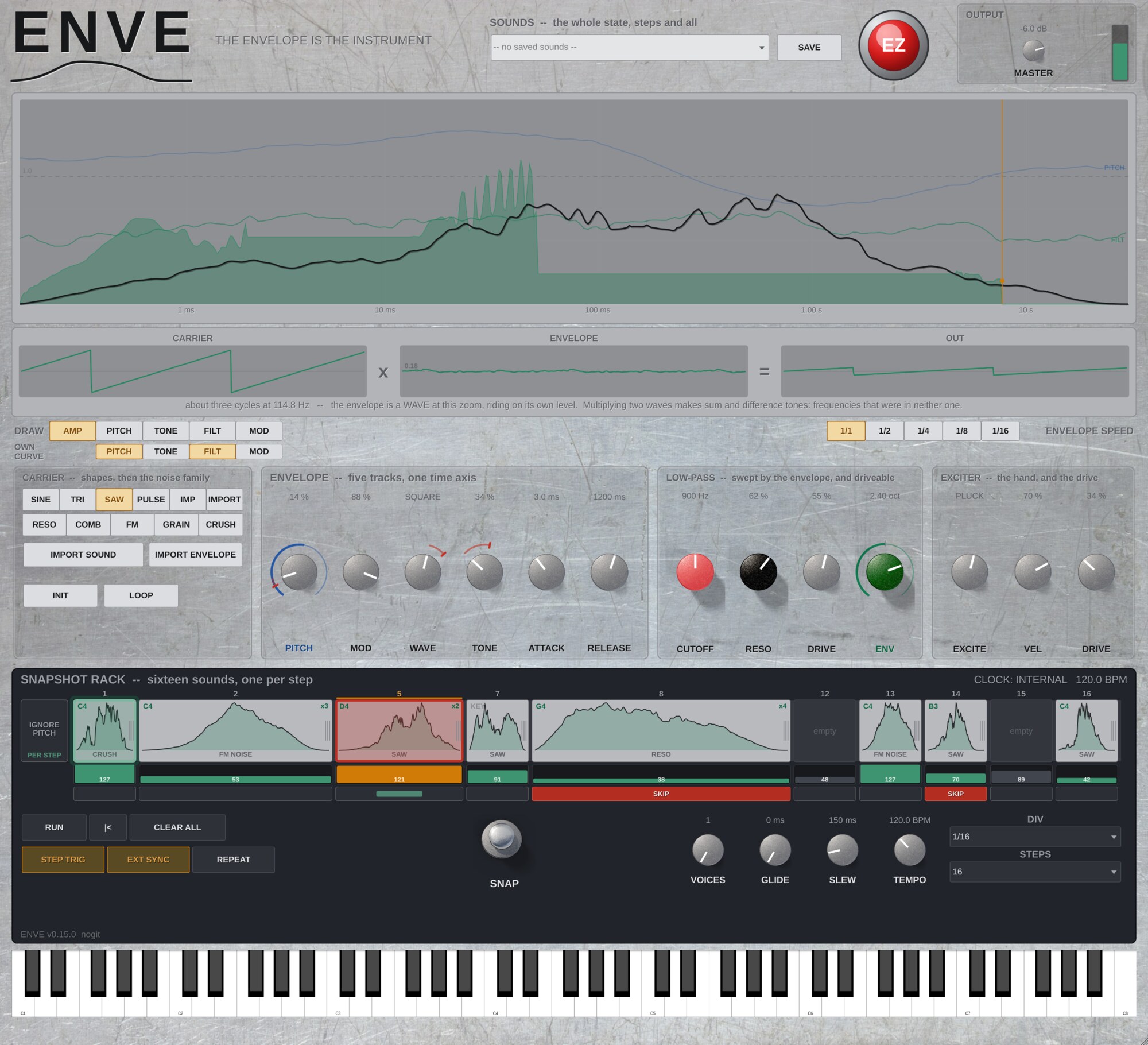 Enve
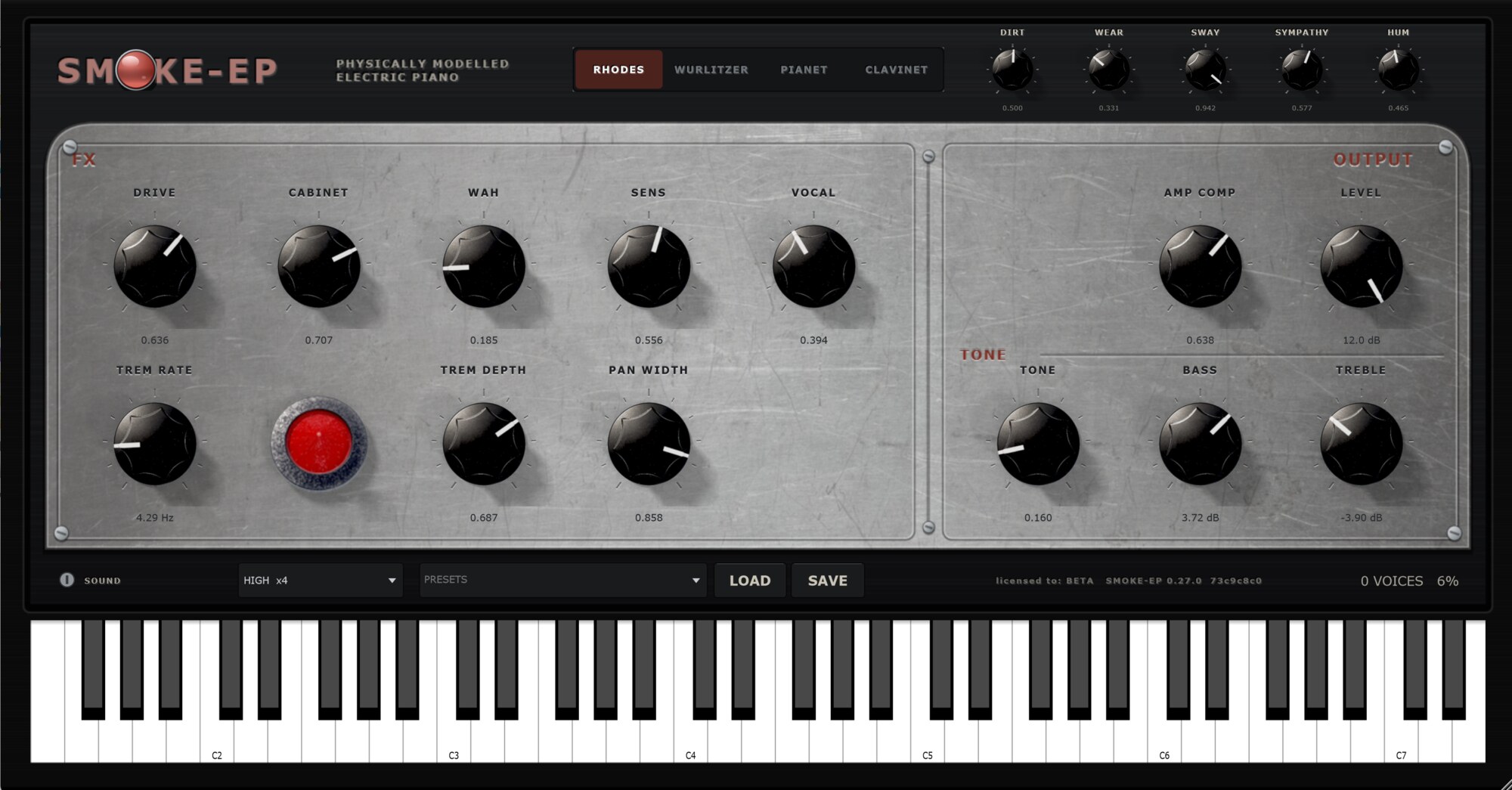 Smoke-EP
 Emax/Mirage
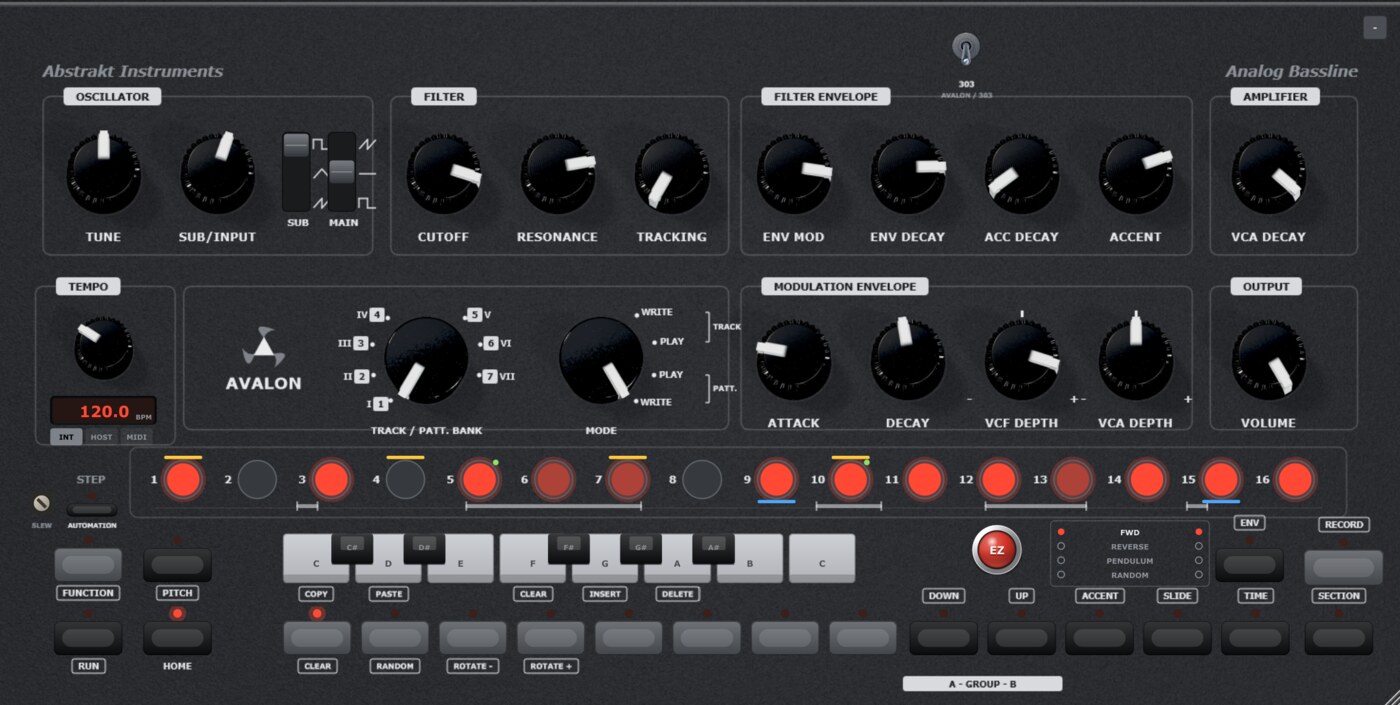 Avalon
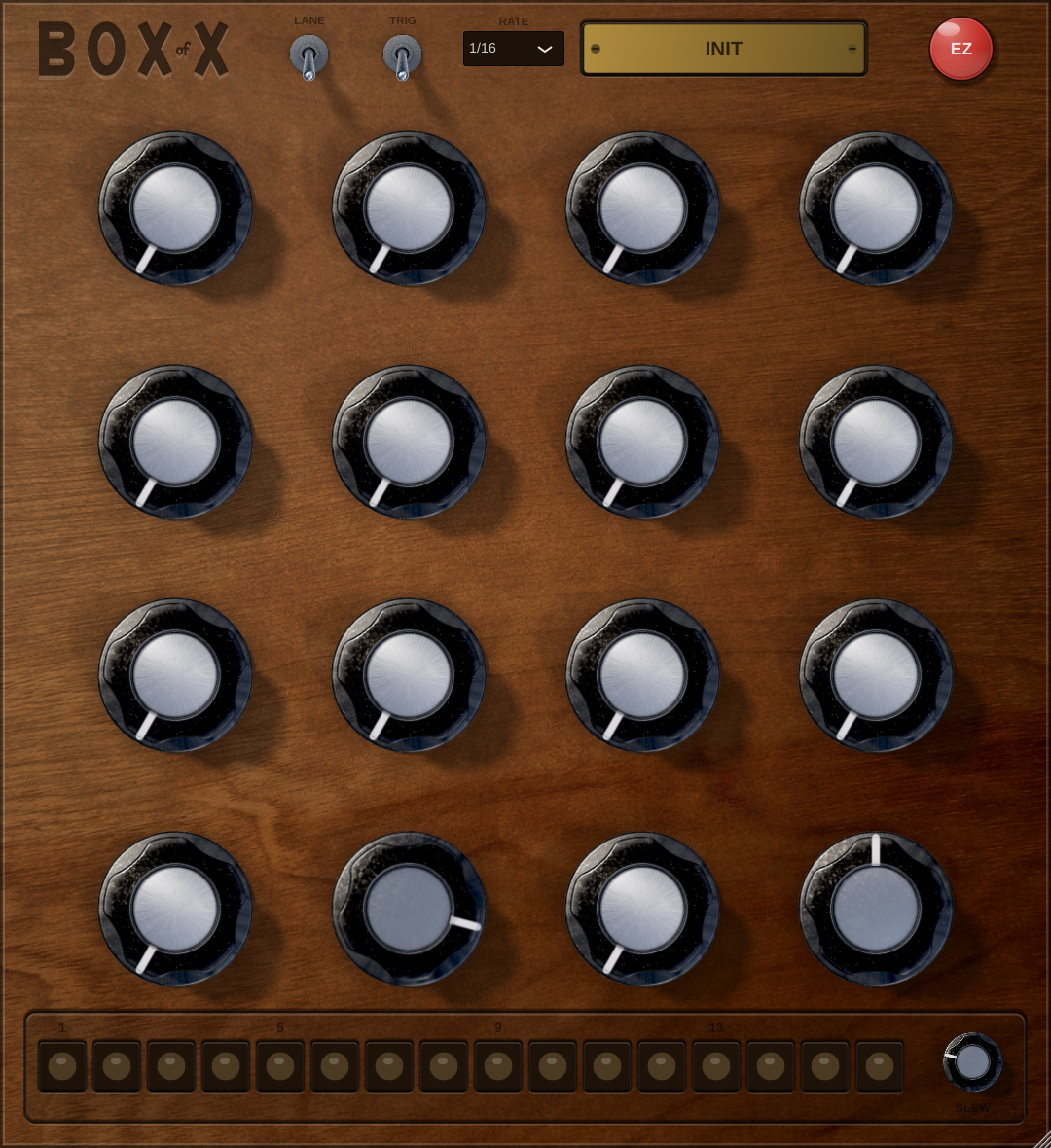 BOXofX
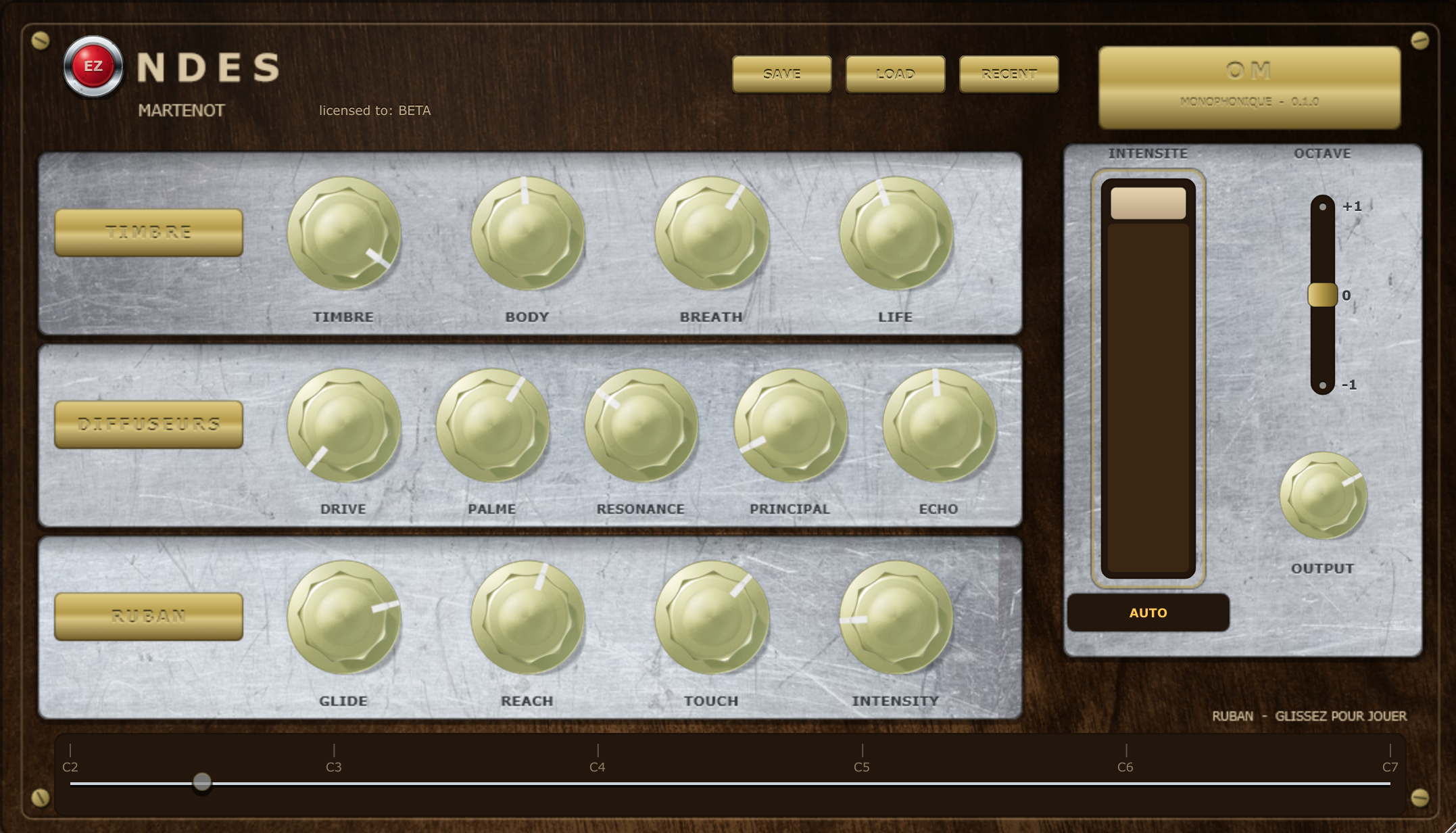 OM
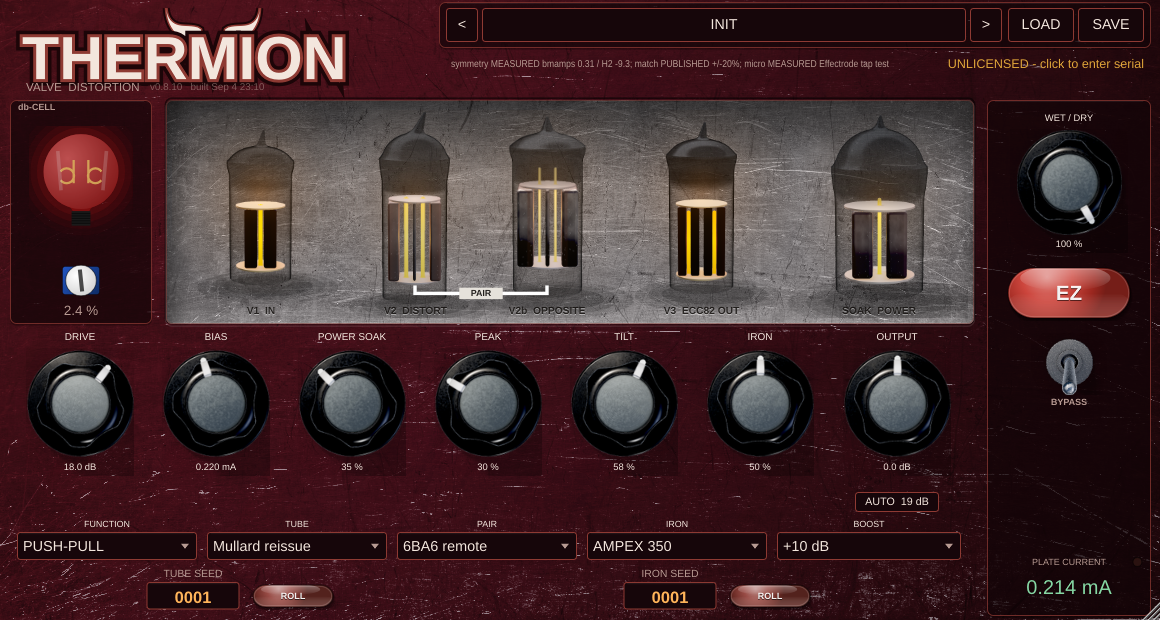 Thermion
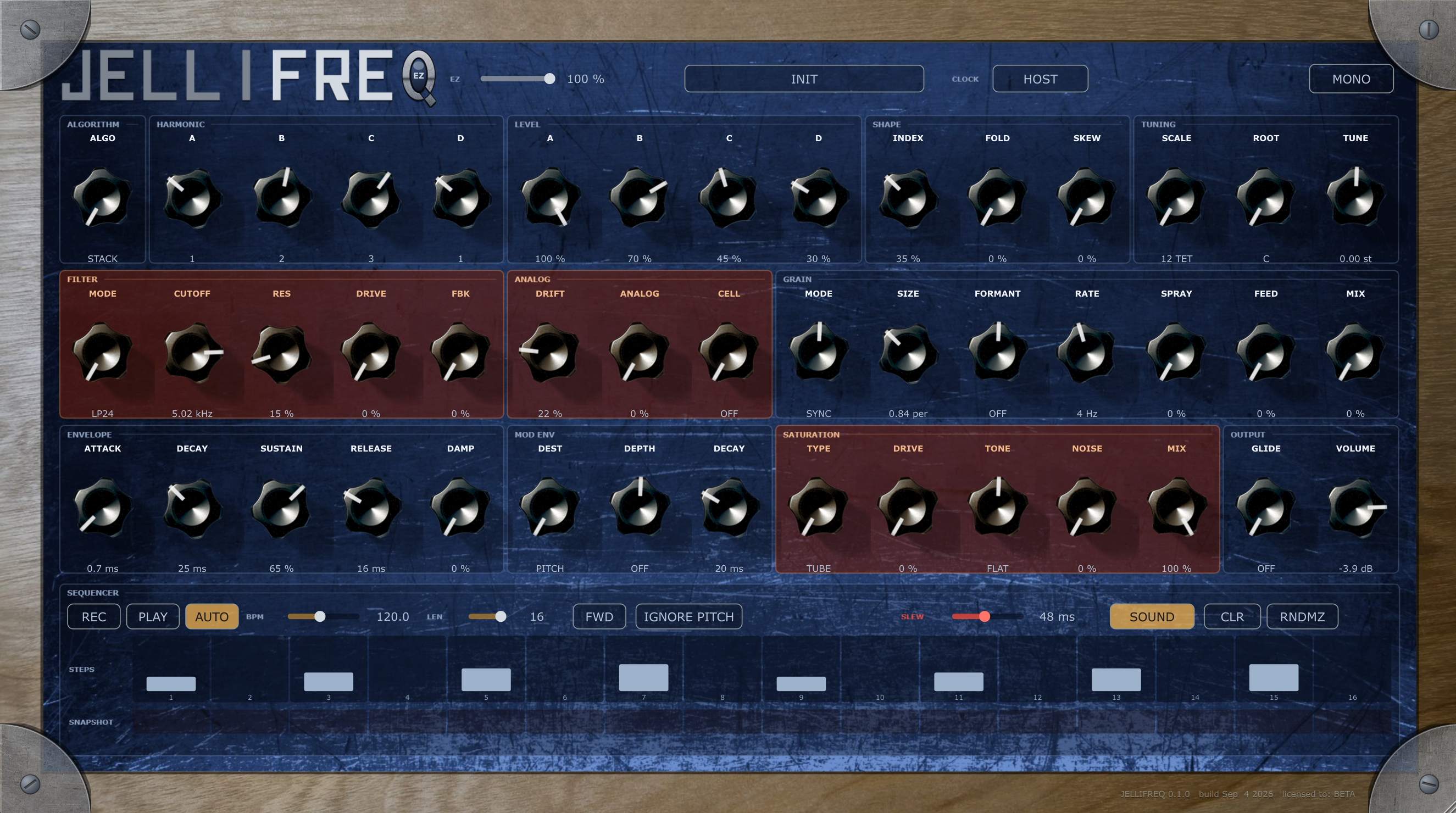 JelliFreq
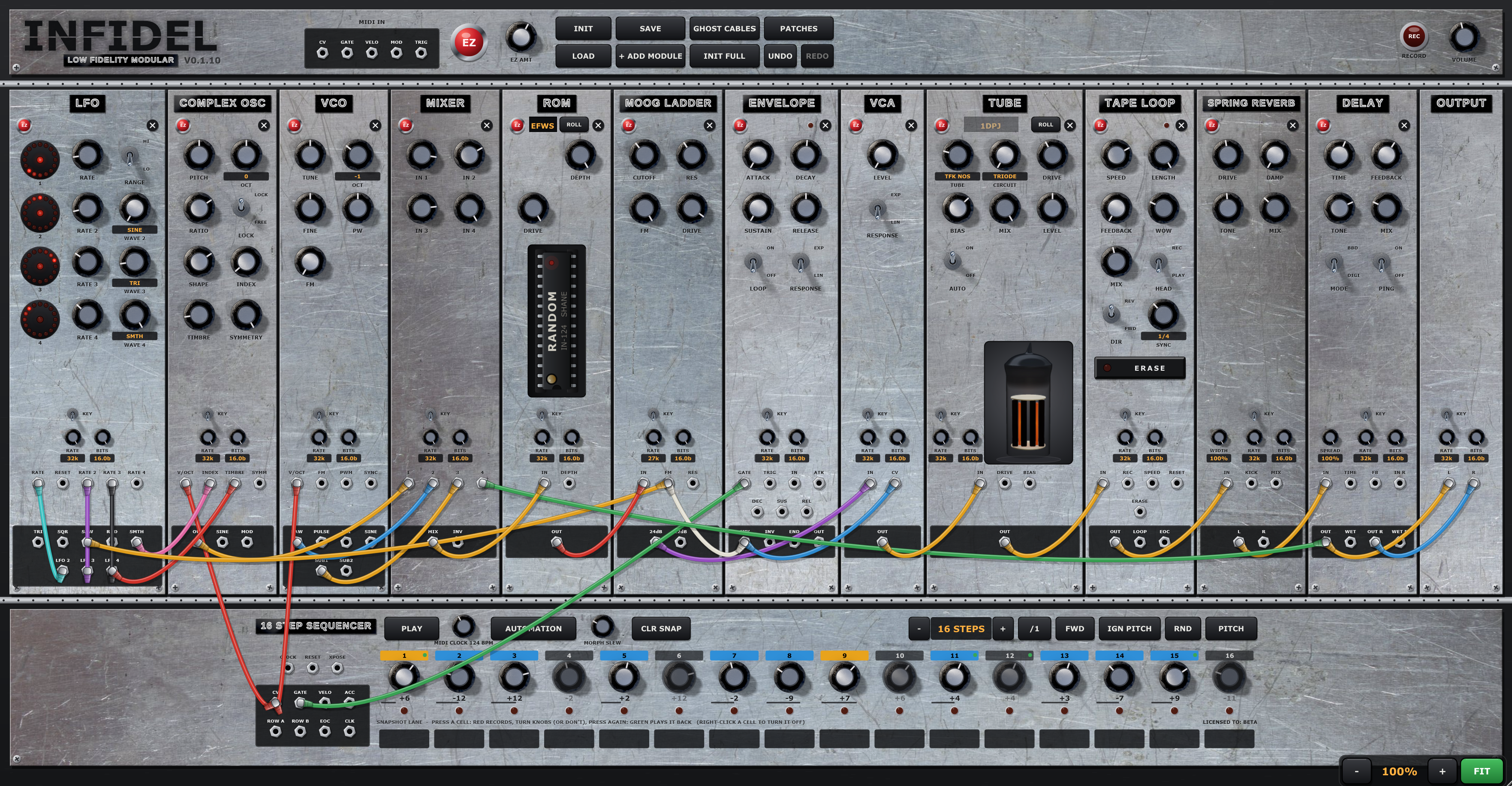 Infidel
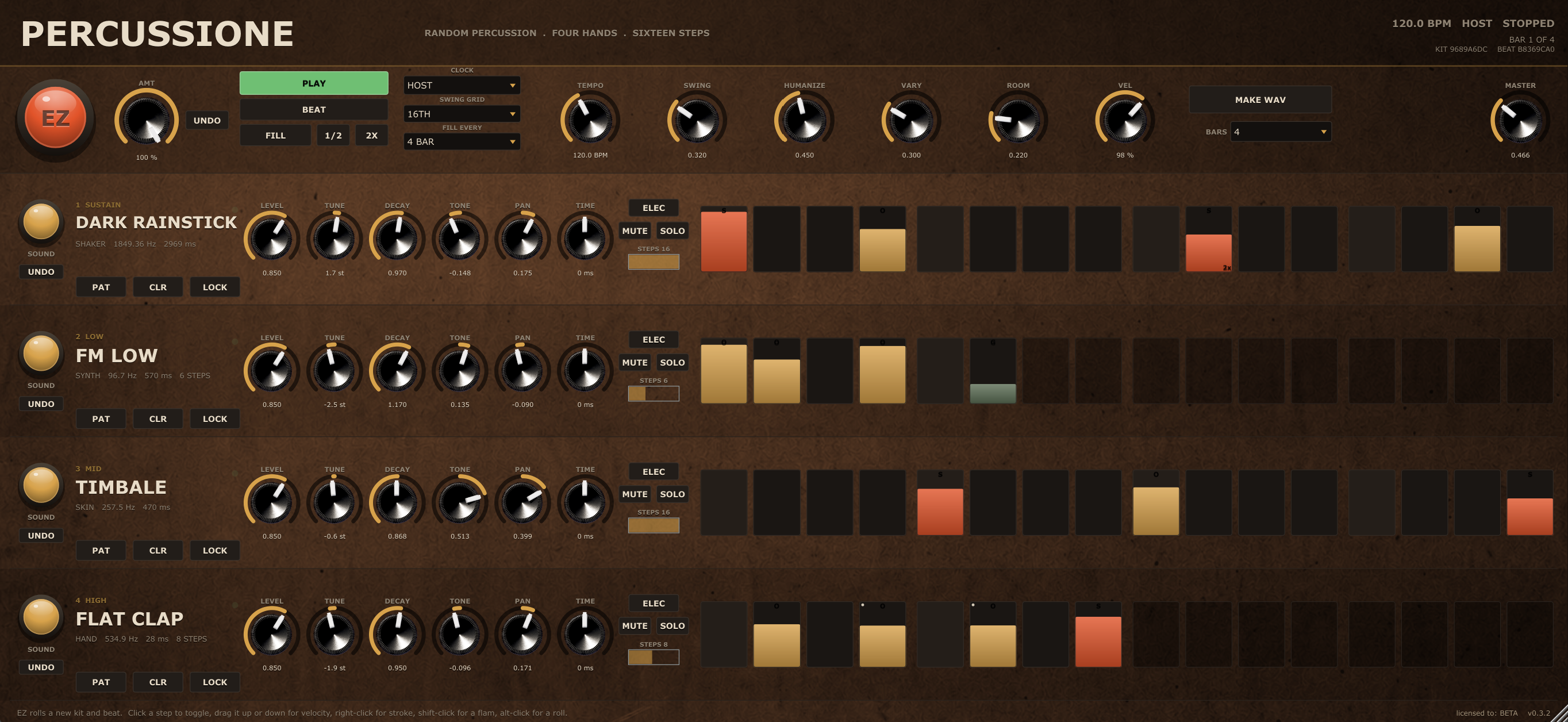 Percussione
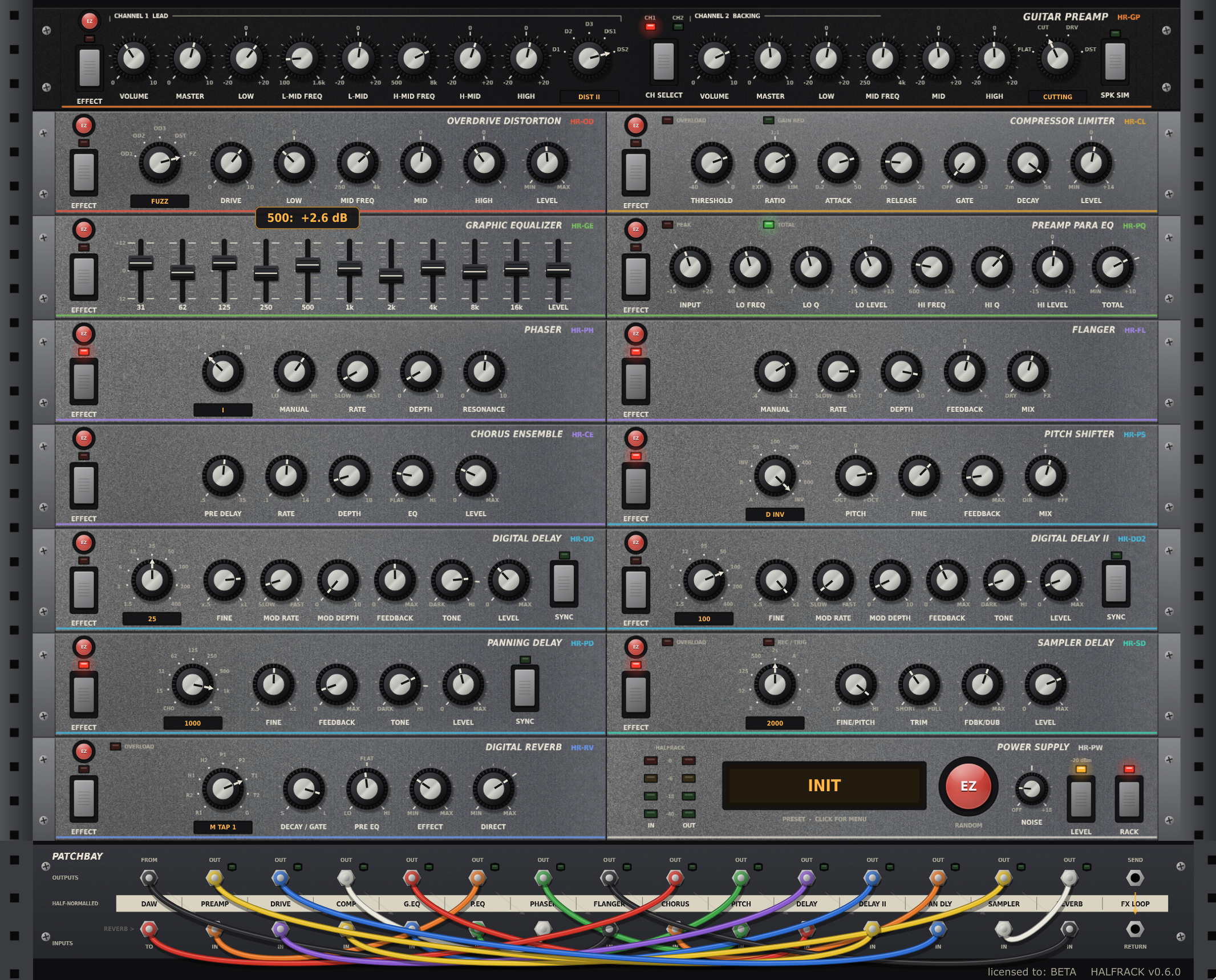 Halfrack
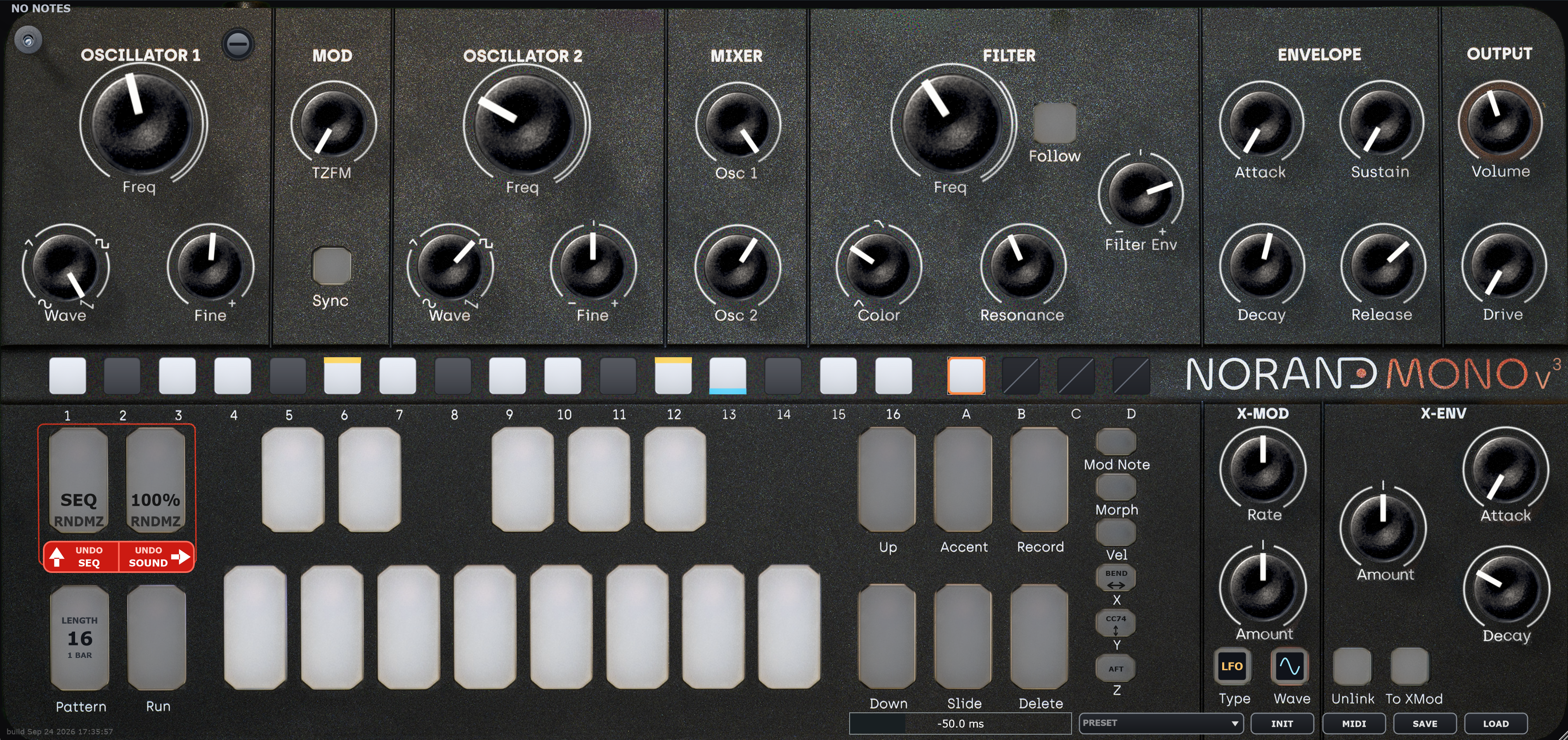 MONO V³
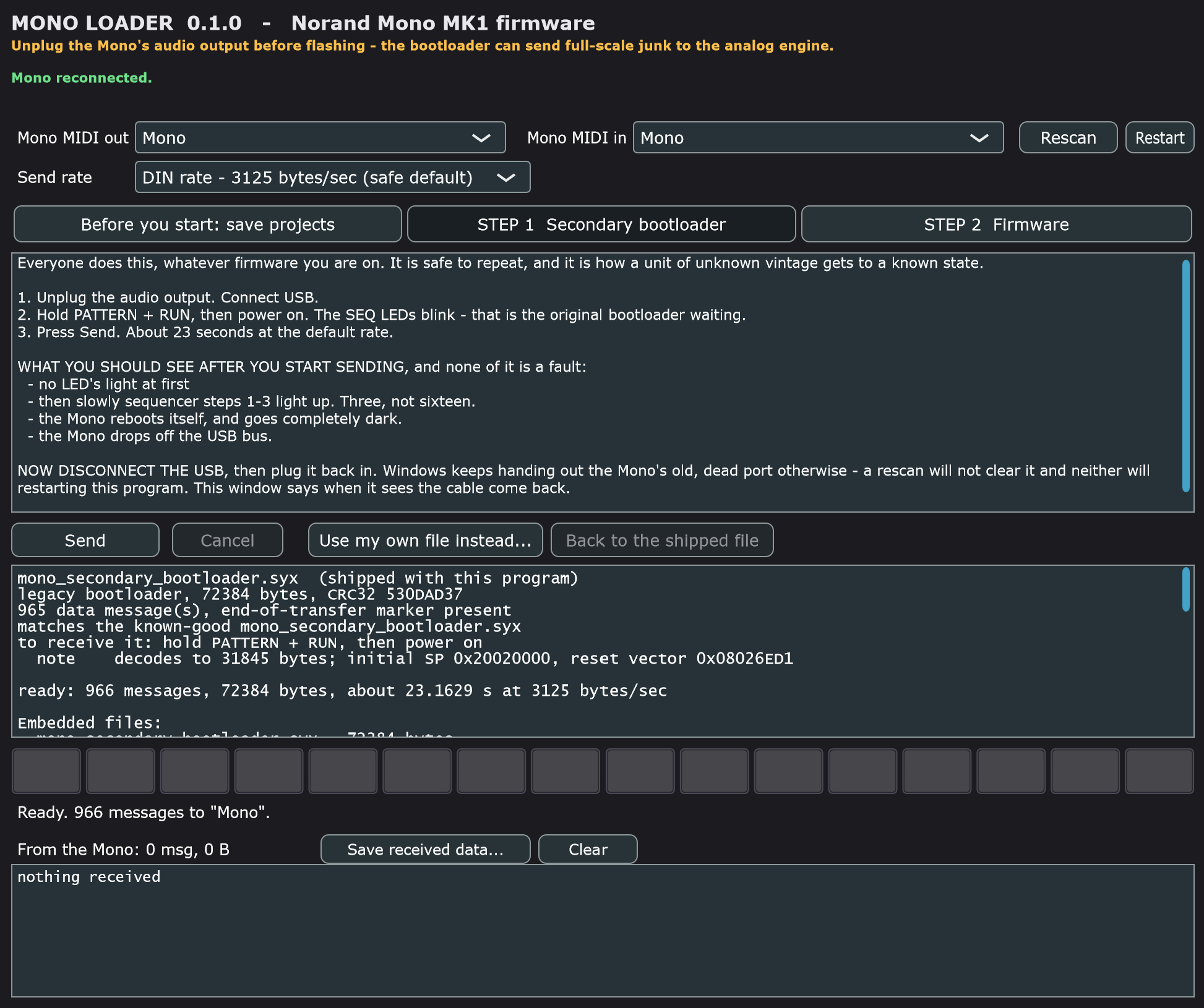 MONOLOADER
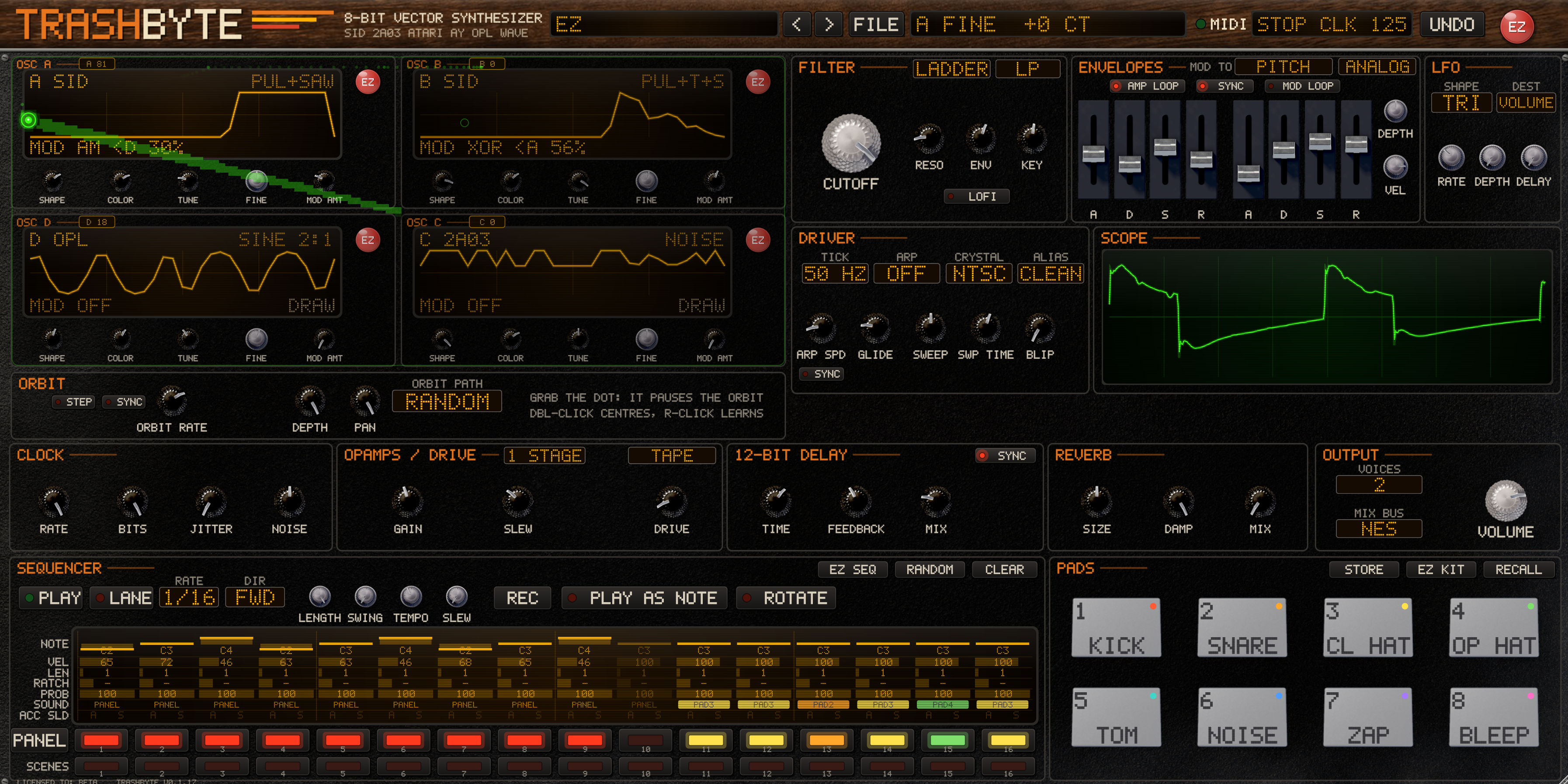 TrashByte
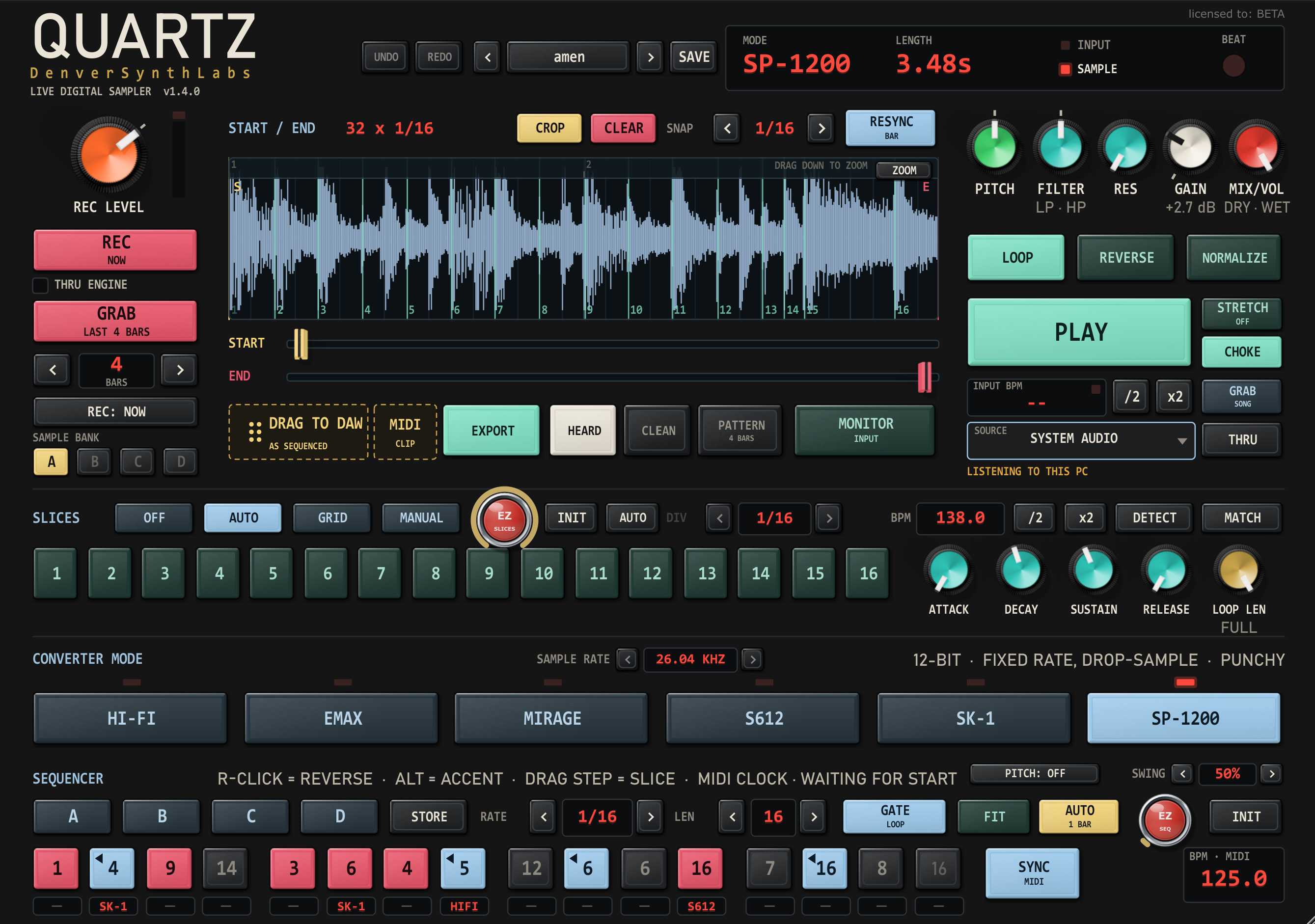 Quartz
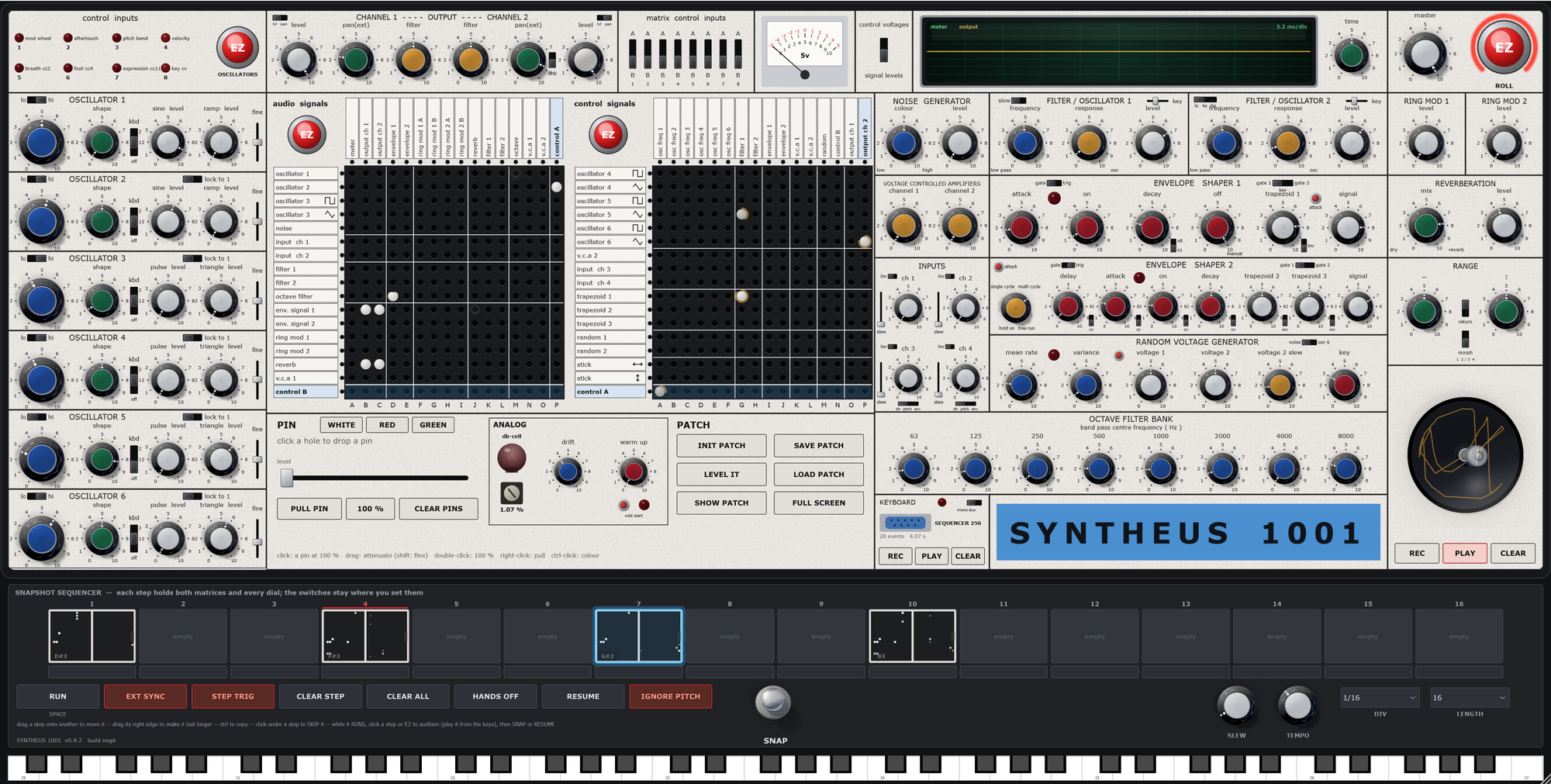 Syntheus 1001
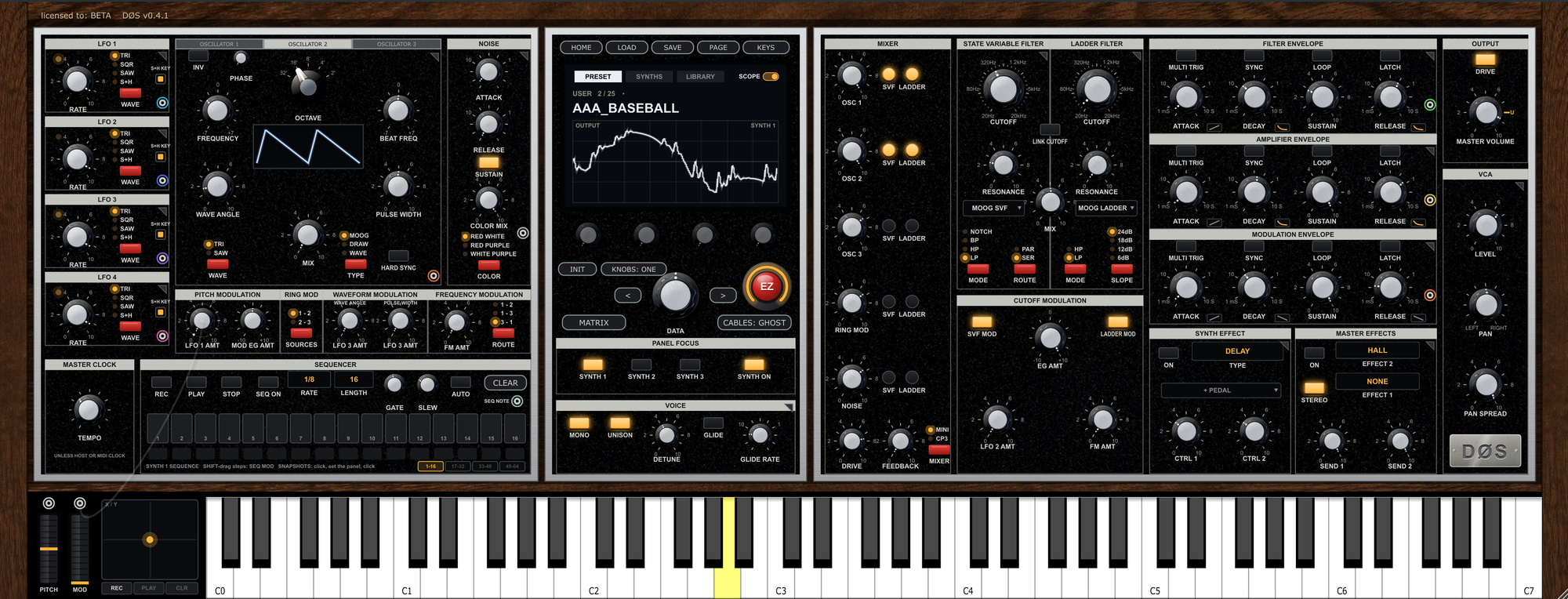 DØS
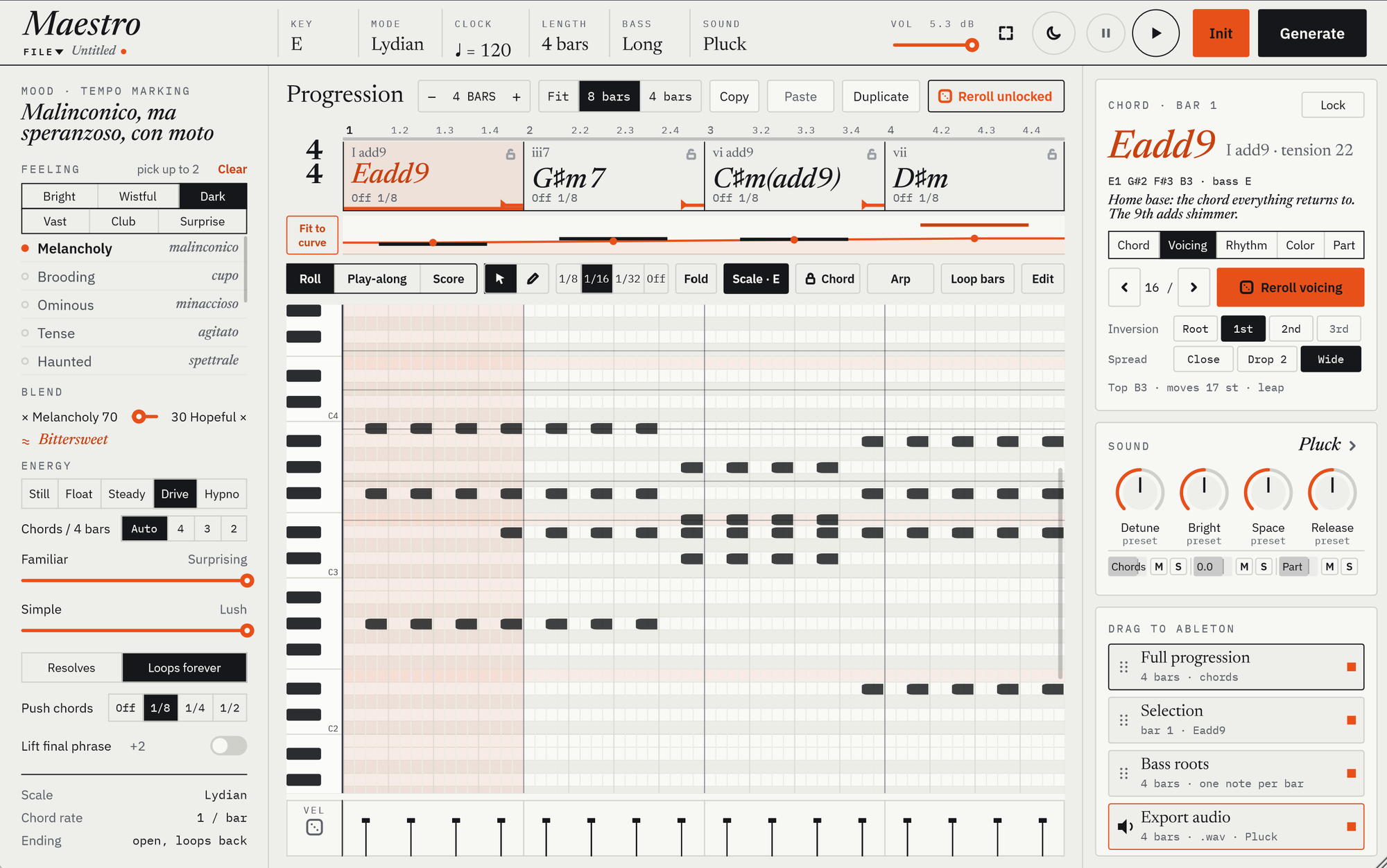 Maestro
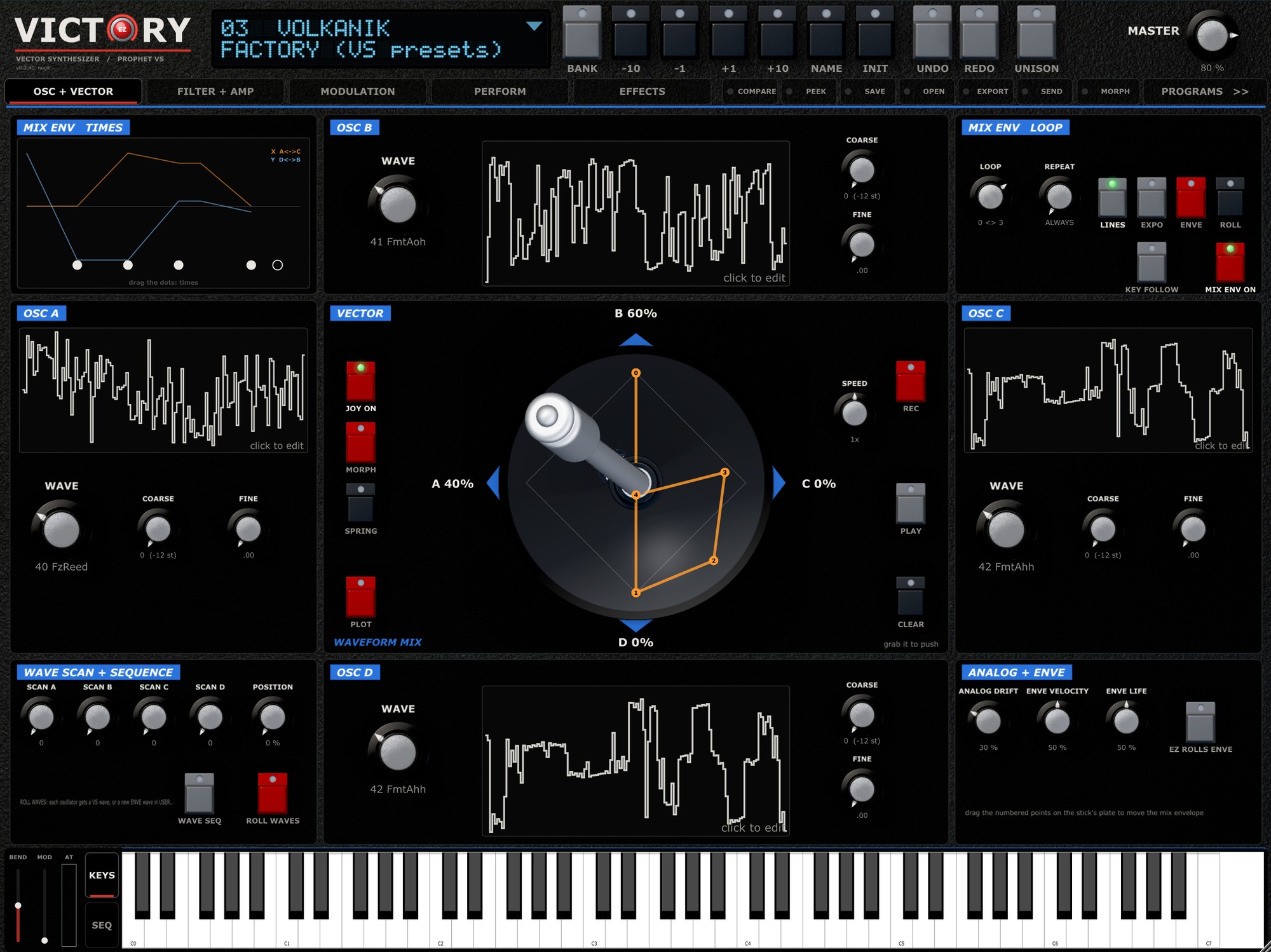 Victory
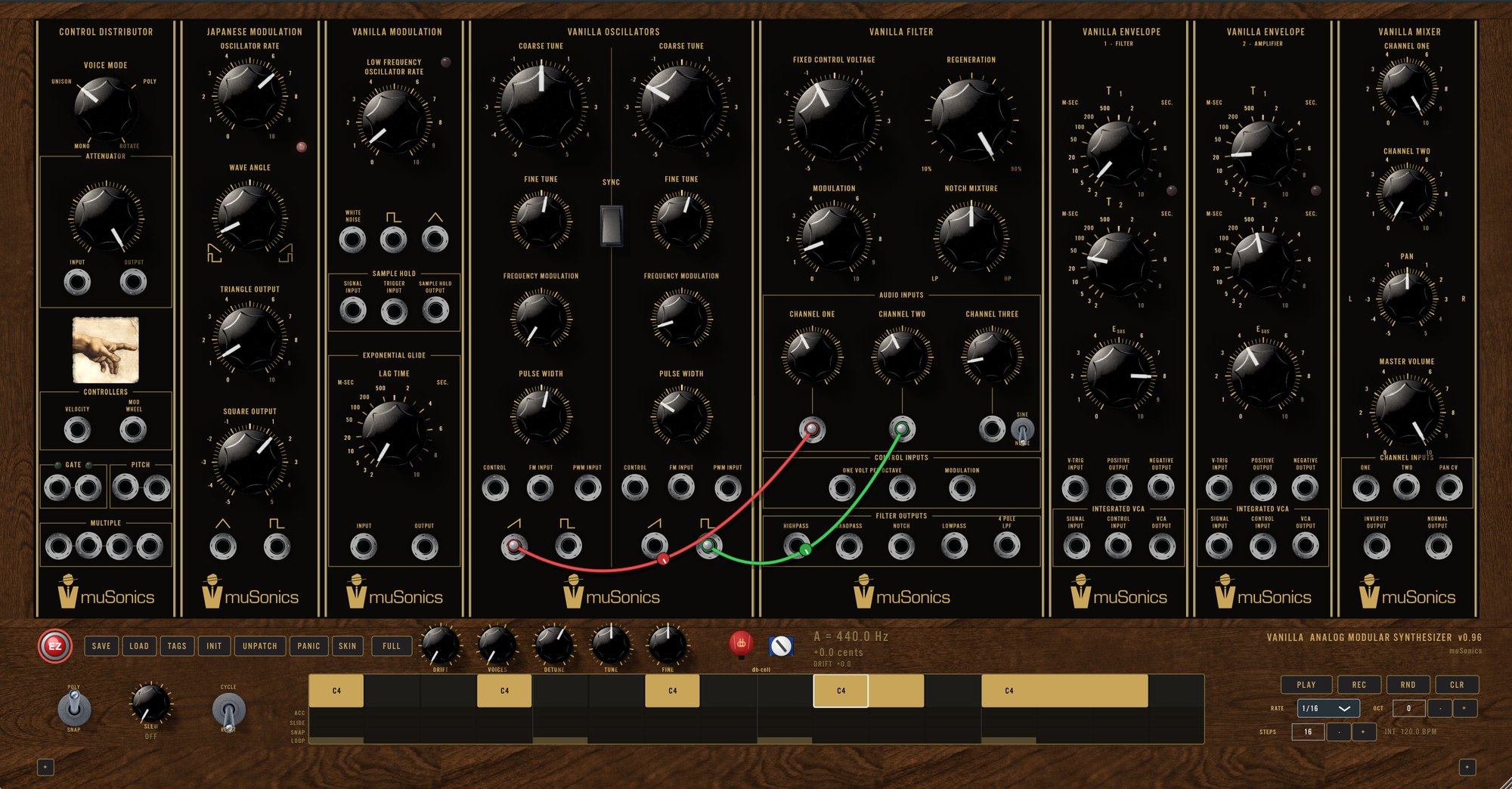 Vanilla
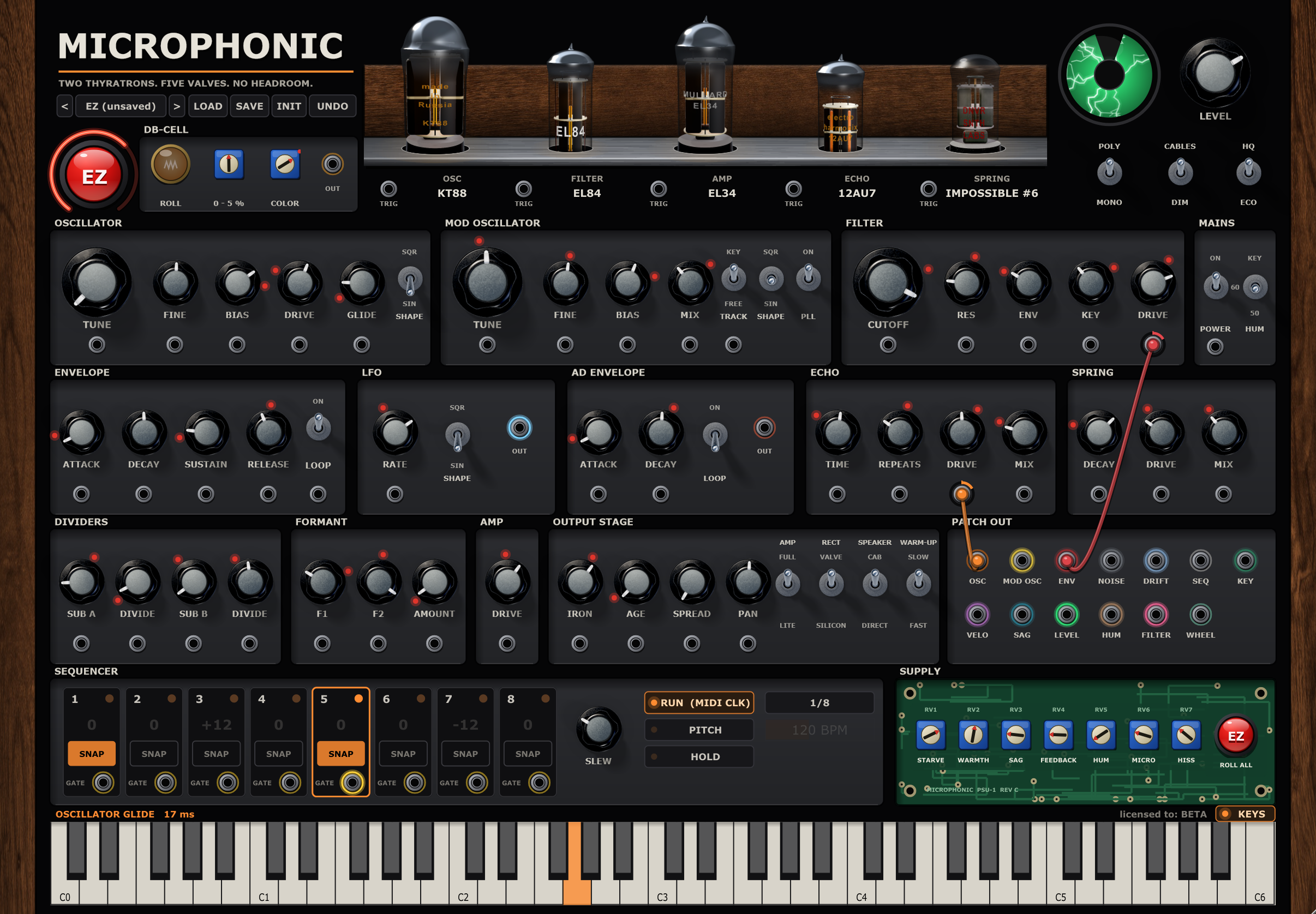 Microphonic
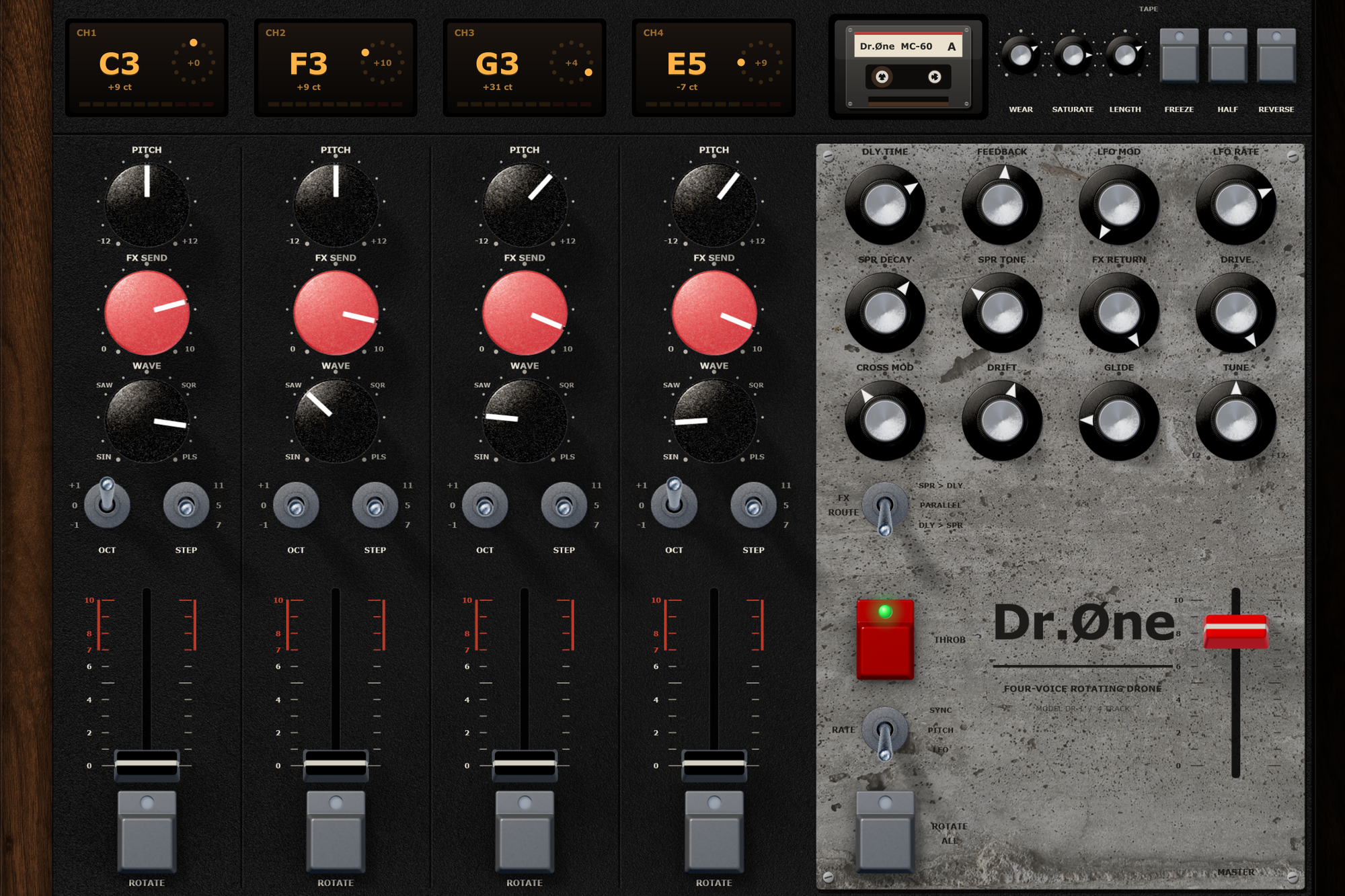 Dr.Øne
A part-for-part emulation of the muSonics Vanilla: a modular analog synthesizer that is, underneath, a vintage Oberheim SEM taken apart and rebuilt as separate patchable modules. The vintage distortion and saturation that the original circuit couldn’t avoid are left in deliberately, on the mixer and filter stages, instead of being engineered out.
Authorized and endorsed by Suit And Tie Guy.
Oscillators, filter, envelopes and mixer are separate modules, not a fixed signal path. Every module has real patch points: the control distributor, oscillators, filter, envelopes and mixer are all independently patchable. Drag a cable and it does what a cable does.
Two oscillators with sync, PWM, sample and hold and exponential glide, exactly as the original SEM laid it out. Measured detail: the sine is a driven triangle, as in the hardware, so its third harmonic sits near −23.7 dB where a pure sine would read −39.3.
A state-variable filter with a switchable notch mixture (LP through HP) and dedicated audio and control inputs. The 4 POLE LPF is a genuine separate four-stage cascade with its own global feedback, checked against the designer’s schematic, not the lowpass tap of the other filter. Keytracking is normalled at full, measured at exactly 1 V per octave: two octaves of cutoff for two octaves of keyboard.
Two full ADSR-plus envelopes with V-trig and gate inputs and integrated VCAs, patchable independently of the main signal path. The VCA is clean, like the hardware’s: in a measured test at full signal its distortion is about 0.8%.
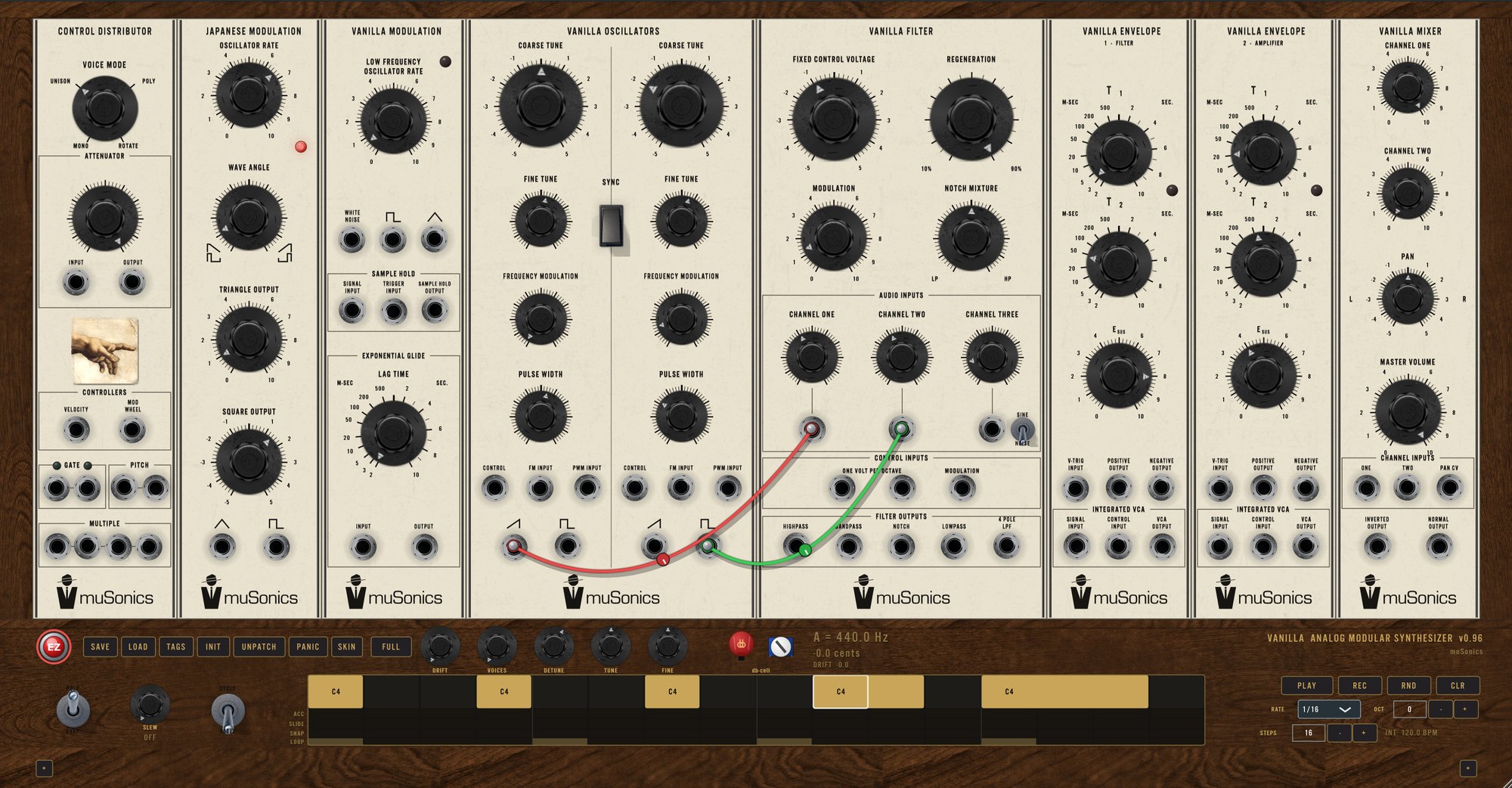
The vintage distortion and saturation are kept in the mixer and filter stages on purpose, instead of being cleaned up like most modern remakes. Drive the mixer and the filter and it behaves like the old circuit does.
Mono, poly and rotate, with level compensation so stacking notes does not pin the output. Unison stacks detuned cards that spread irregularly up to ±50 cents, with one card exactly in tune, and gets louder as you stack. A sequencer re-articulates both envelopes on every step, and patches carry author, type and notes tags.